Hardware brands selling portable energy stations operate in a high-frequency, low-variety support loop. Prospective buyers across social channels repeatedly ask the same baseline questions: ballpark pricing, physical store availability like "tiene tienda?", and real-world runtime for everyday appliances. Whether a user asks a broad "precio del power bank" or specifies "Para el TV", answering every incoming comment and direct message manually consumes human hours on repetitive triage. Operators check product specs and do mental wattage-to-hour math for the 662Wh LiFePO4 Fremo X700, delaying responses to high-intent leads who are ready to purchase.
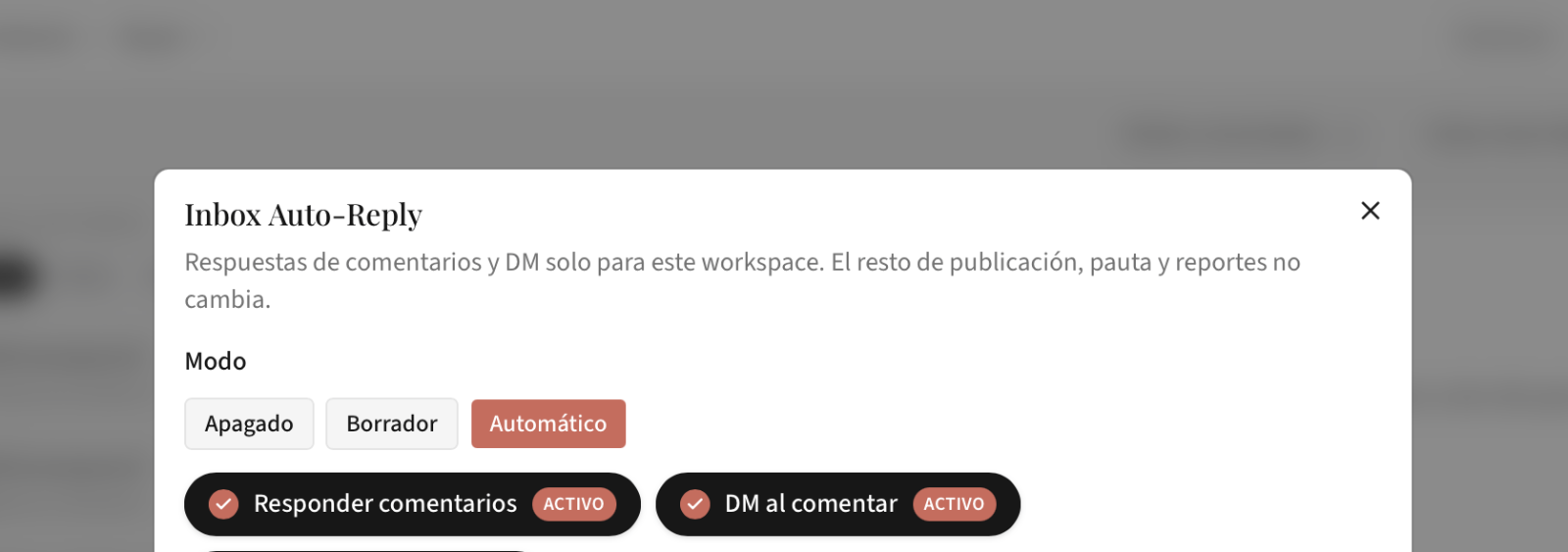
To reclaim these hours, the architecture inside Konkava for the EliosX workspace replaces manual inbox scraping with an event-driven autopilot loop. Using a social media API bridge like Zernio, the system ingests incoming comments and direct messages via real-time webhooks. Instead of relying on cron schedules, every new interaction triggers an immediate routing check against explicit channel toggles—"Responder comentarios", "DM al comentar", and "Responder DMs"—ensuring the automation only executes on intended surfaces while avoiding unnecessary API quota burn.
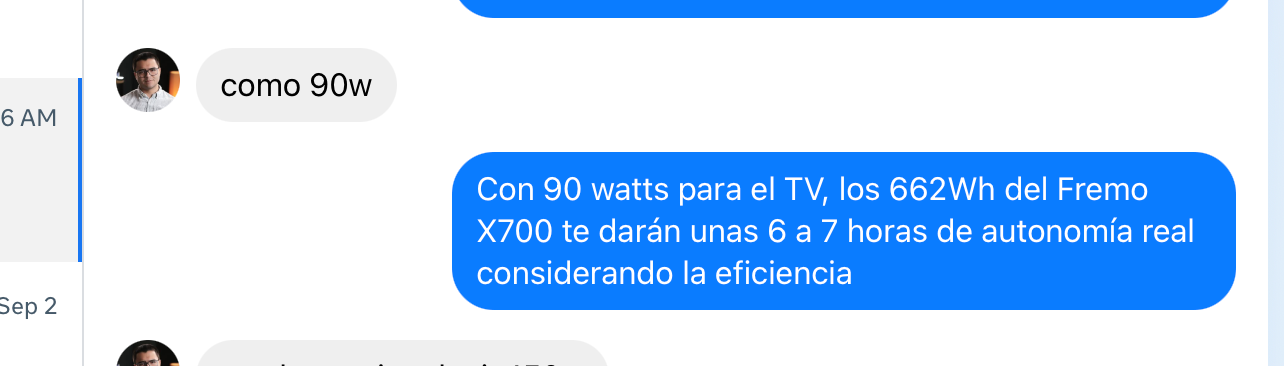
Connecting a raw language model directly to this bridge exposes a critical gap between a functional AI reply and a technical specialist. When a user mentions their television consumes 90W and later corrects with "perdon, quise decir 150w", a raw prompt instruction often forces the model to over-recite the script. Instead of directly answering the runtime question, it repeats full price ranges and defaults to corporate brochure phrasing like "el valor de referencia se mueve entre..." instead of delivering direct answers.
More critically, language models are inherently probabilistic. Even with explicit prompt instructions to avoid opening upside-down question marks, trailing periods, or filler sign-offs like "¿Te ayudo con algún detalle más?", the model inevitably drifts. Closing punctuation carries high statistical weight in standard Spanish generation. A probabilistic engine predicts high-likelihood tokens; it does not reliably execute hard formatting invariants.
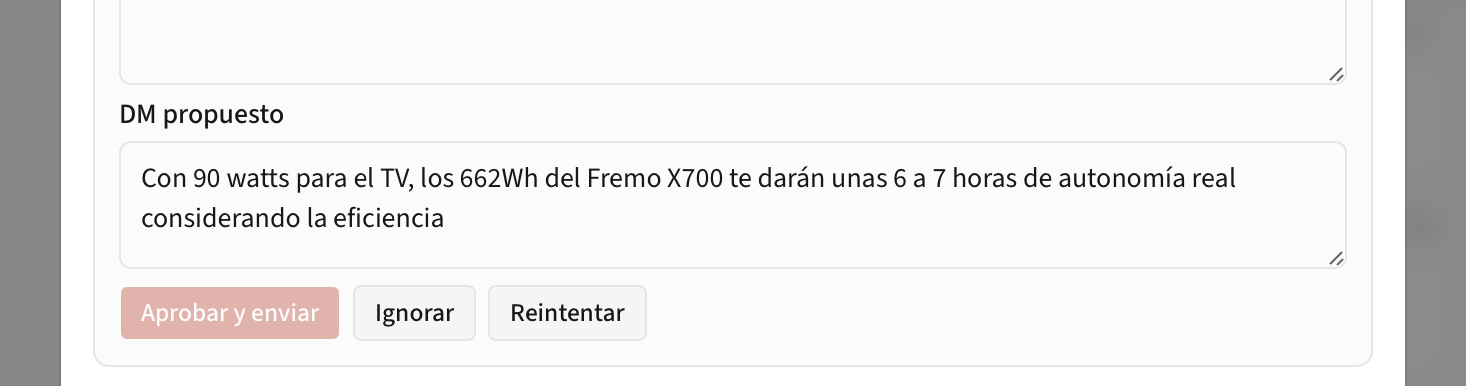
To bypass this drift, the autopilot pipeline splits the workload. The first layer handles context hydration and intent classification. Incoming webhook events are classified (e.g., price_inquiry), and the model inspects prior thread turns. The engine executes grounded electrical math—embedding the autonomous hours formula of (Wh × 0.85) / Watts and market guidance of $1.00 to $1.30 USD per watt-hour—to instantly calculate realistic estimates without manual quote bottlenecks.
The second layer introduces a deterministic post-processor before the API bridge dispatches the outbound reply. Natural-language style constraints entered in the workspace "Voz de marca" settings are parsed into explicit boolean flags, such as noTrailingPeriod and noOpeningQuestionMark. Before any generated draft is saved or sent, this code sanitizer strips prohibited punctuation, enforces idempotency to prevent bot-loop self-replies, and replaces sales-heavy phrasing like "Tenemos" with direct, informative answers like "Hay". Decimal values and electrical units remain protected through word-boundary anchors.
Teams begin this rollout in a draft state, reviewing and refining proposed replies in the "Últimos ítems" queue. Once idempotency holds and the post-processor consistently validates the output, operators switch to automatic mode, trusting the engine to dispatch public replies and private follow-ups autonomously.
True automation in a customer-facing inbox requires accepting what an LLM is and what it is not. It is a powerful semantic reasoning engine, not a reliable formatting compiler. When probabilistic understanding is governed by deterministic event rules, human operators stop acting as spelling checkers for a bot and return to closing the deals that matter.


Strategy, design, content, growth, and AI operations.