EliosX designs and installs solar panels, batteries, and backup systems for businesses in Ecuador, ensuring continuous energy and cost control. The previous site, inherited from a Webflow dump, mirrored the company's internal org chart: software, kits, and infrastructure mixed into a menu that ignored how a plant manager or store owner actually buys. The visitor does not arrive to discover a brand; they arrive with a power outage, a high bill, or a noisy generator.
Rebuilding a data-heavy commercial frontend requires tight coupling between UI components and state management. We constructed the Next.js 16 App Router architecture using an agentic development workflow within Cursor. By orchestrating Tailwind v4 and shadcn/ui directly alongside the logic layer, the development environment shifted from writing standard boilerplate to rapidly iterating on complex interaction paths.
Beyond visual velocity, this agentic paradigm allowed us to architect a highly agile content management infrastructure. Instead of hardcoding product specifications, the agentic workflow rapidly wired Supabase data bindings to the frontend in parallel with UI construction. Static commercial content remains safely versioned in the repository, while dynamic hardware kits, lab reviews, and comparison metrics stream from a live database. This sets up a new maintenance paradigm where the EliosX engineering team can update battery cycle life or add a new inverter brand instantly, without ever touching the codebase or waiting for a deployment.
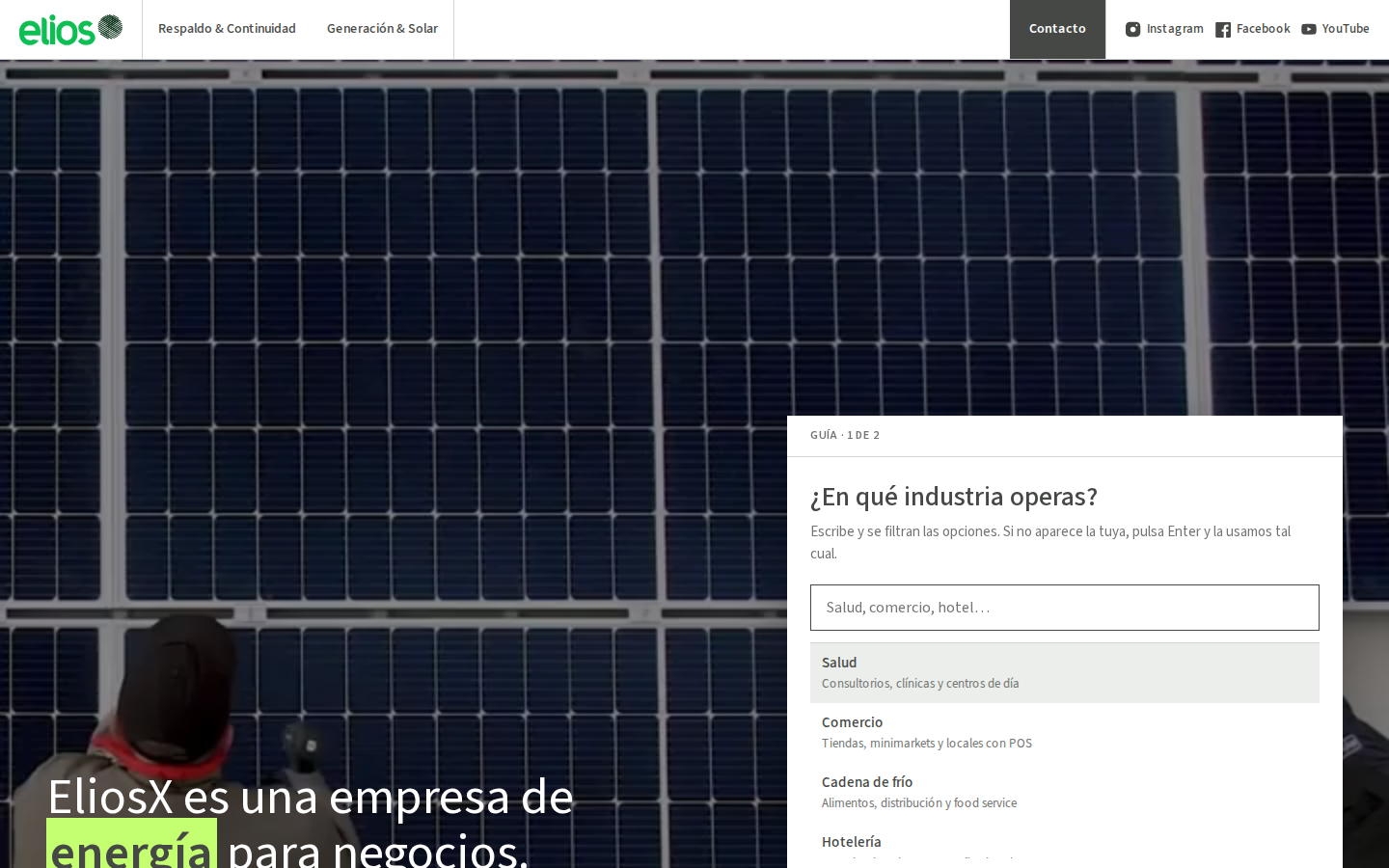
The previous navigation menu forced users to choose between overlapping categories like SMEs, Custom Projects, or Software. We collapsed the entire structure into two commercial solutions: Backup & Continuity, and Generation & Solar. The hero section now opens with a clear positioning statement and a two-step wizard. Instead of presenting a generic catalog, the site asks the visitor for their industry.
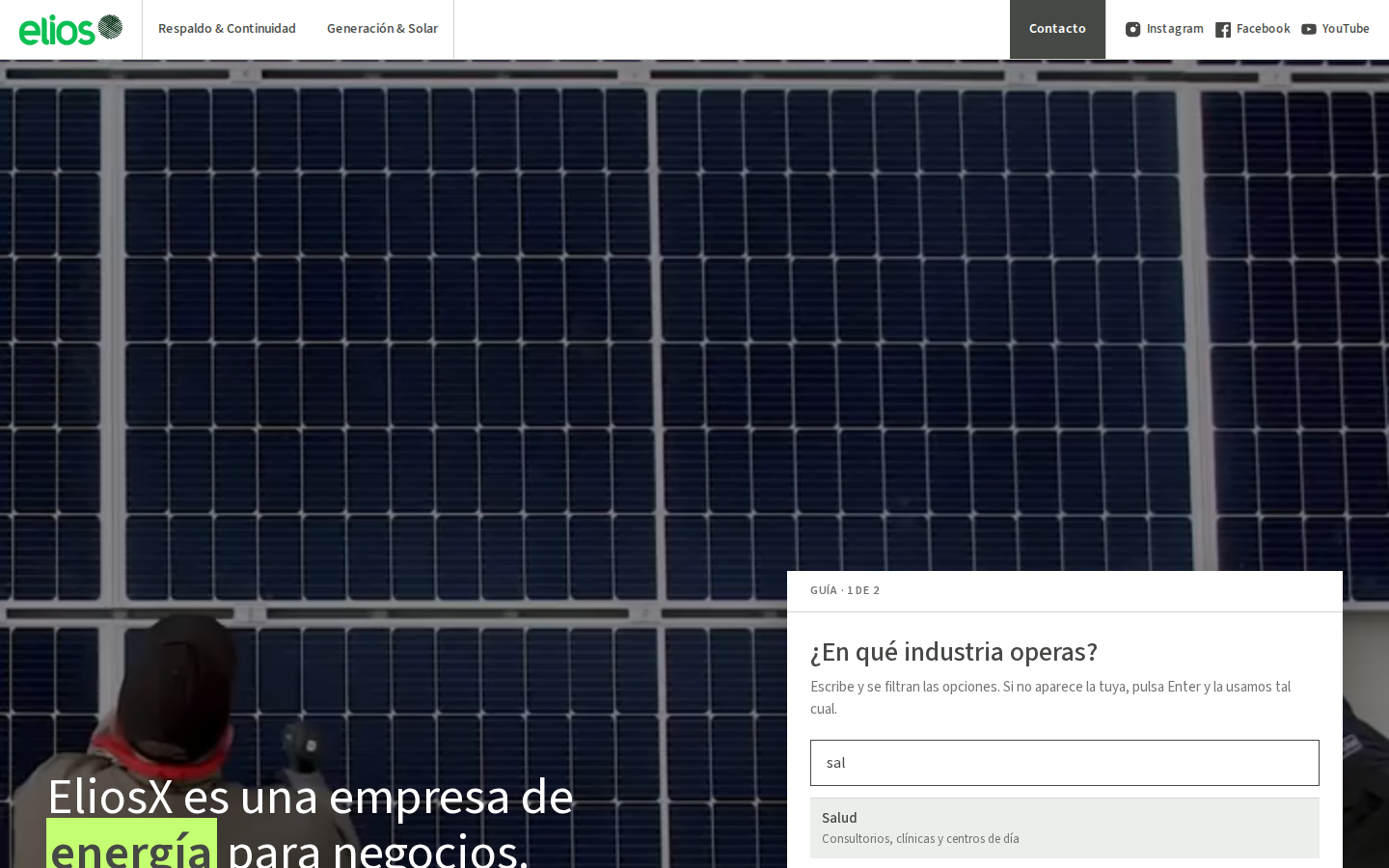
As the user types, the list filters live on the client side without round-trips to the server. If their exact niche isn't listed, pressing Enter accepts the free text and carries it forward. The second step asks for the operational pain point—preventing shutdowns or controlling costs—which maps directly to the two main navigation paths.
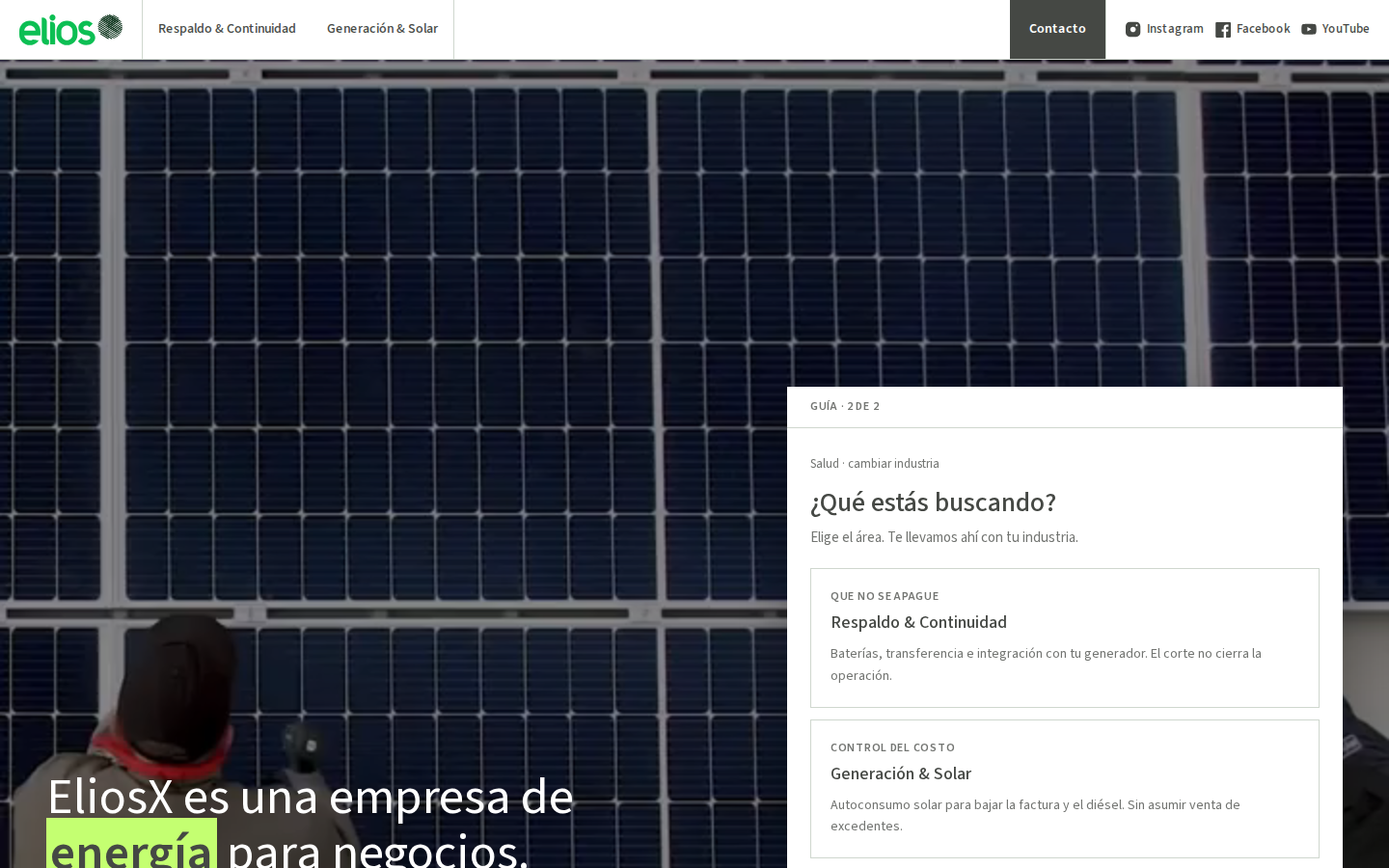
The backup landing page introduces the first functional product of the relaunch. A compact wizard floats on the right side of the hero section, capturing the industry and pushing the user to the calculator.
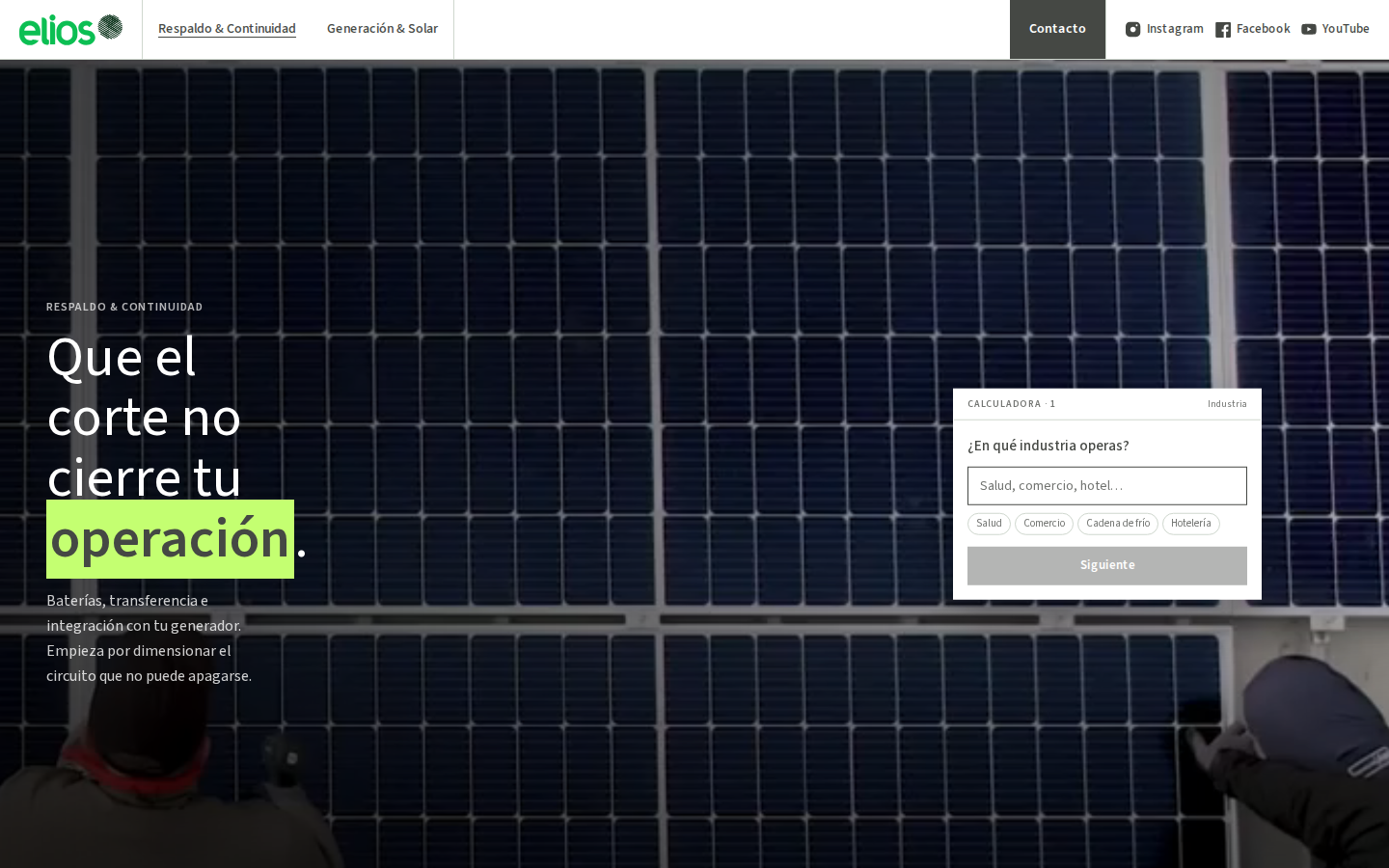
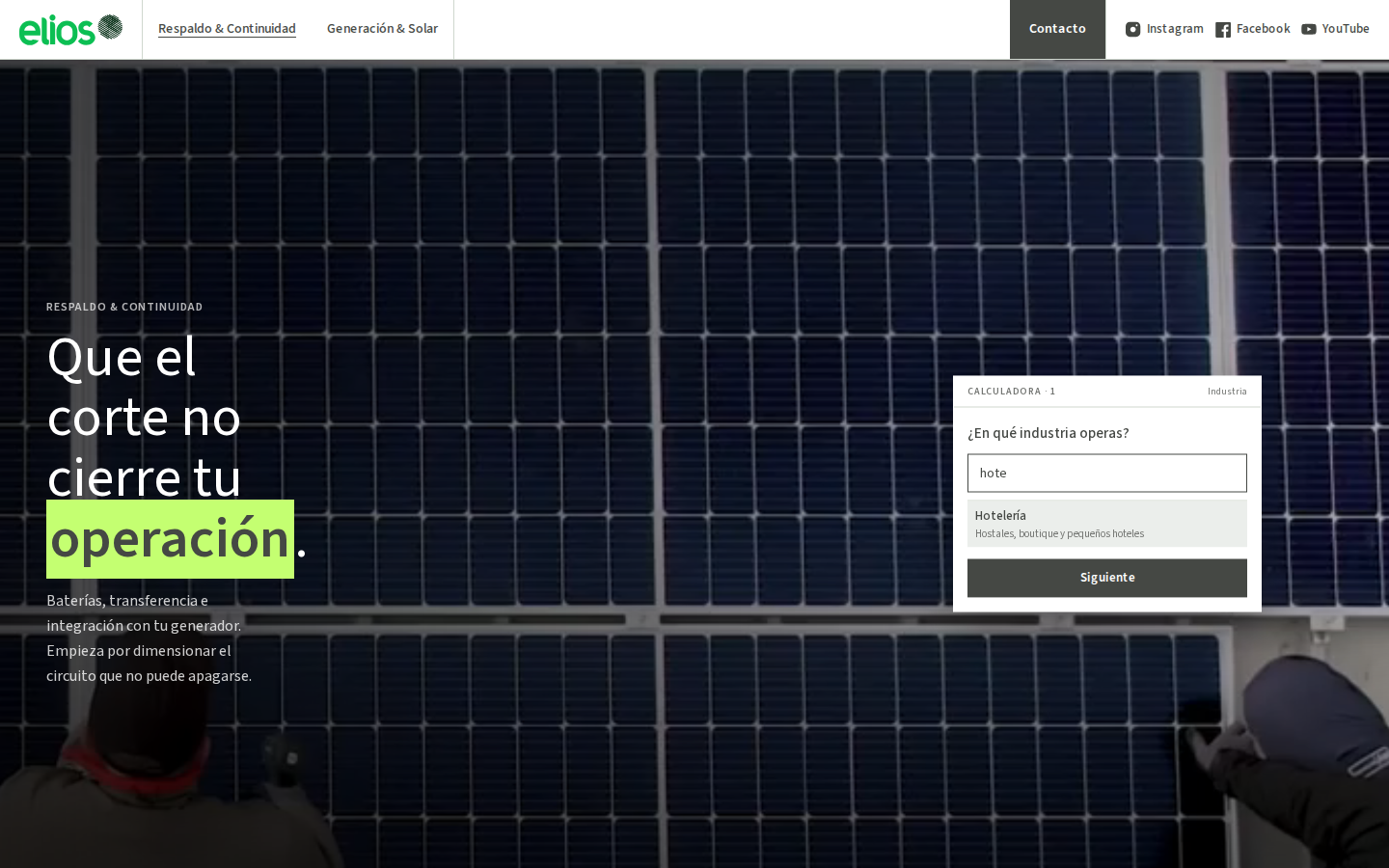
We discarded the standard blank-slate calculator approach. The Next.js framework passes the industry search parameters through the URL into the page boundaries. If a visitor arrives from the healthcare selection, the calculator opens pre-filled with typical loads for that sector. The interface populates with clinical lighting, medication refrigeration, and payment terminals, displaying editable wattages and hours.
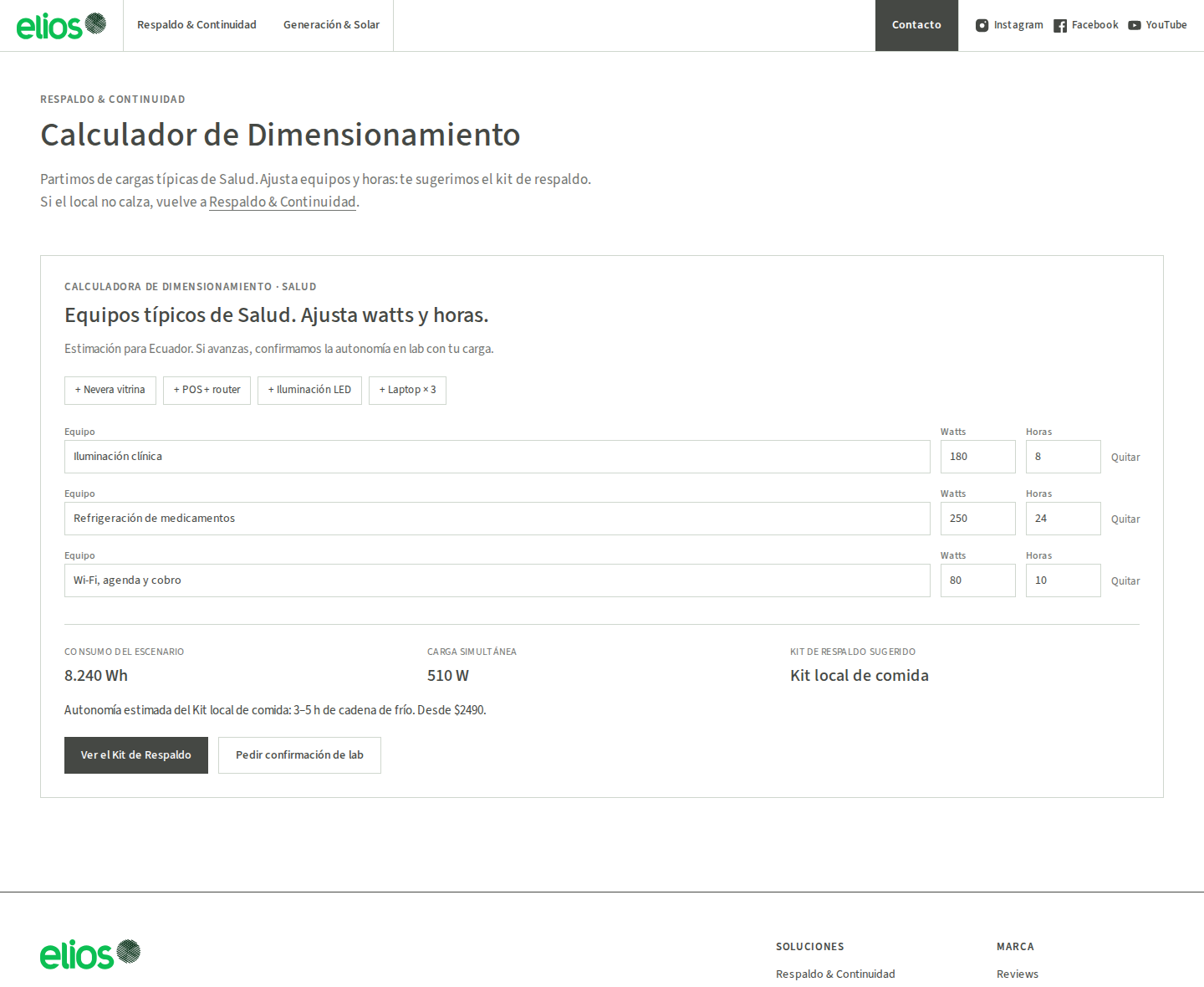
The mathematical model calculates the scenario's total watt-hours and simultaneous load, immediately suggesting a specific hardware kit. This provides a baseline tailored to the Ecuadorian market, replacing friction and guesswork with immediate context.
The second solution, Generation & Solar, requires an entirely different acquisition path. Commercial solar is not an impulse purchase closed with a pre-packaged kit. The user journey requires measuring the return on investment, auditing the roof space, and evaluating existing diesel generators.
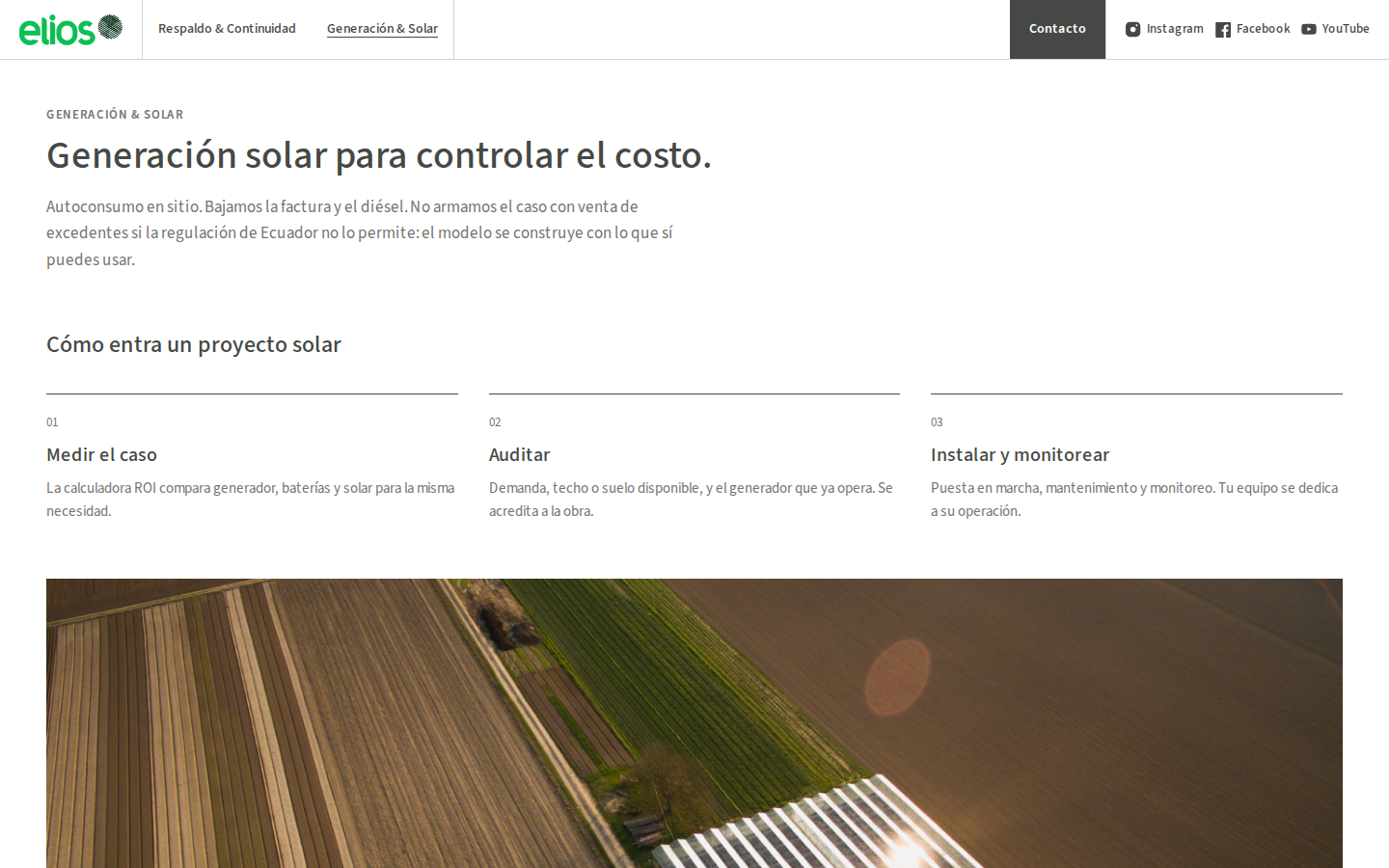
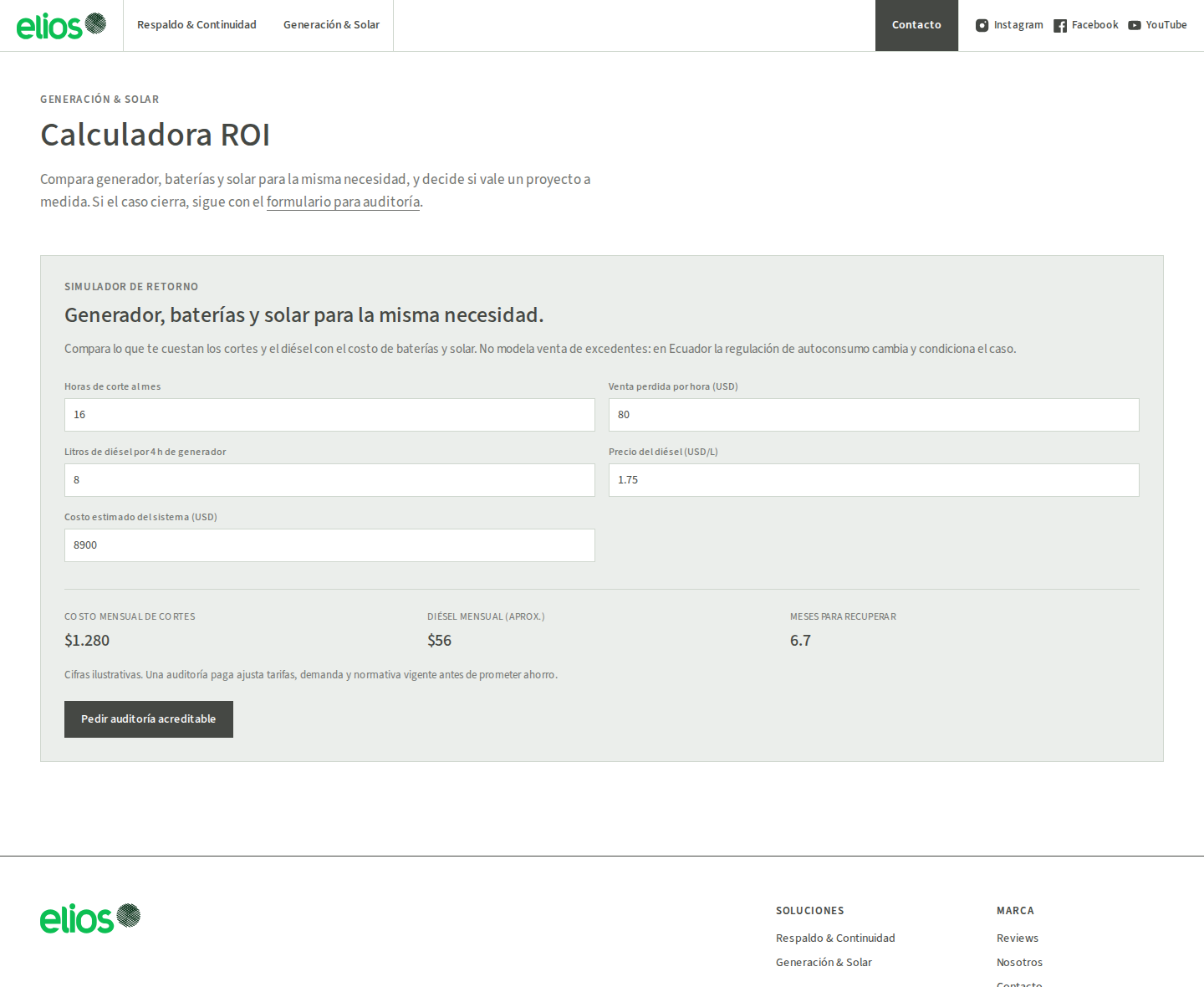
The ROI calculator compares a generator, battery backup, and solar generation for the exact same energy need. Crucially, the copy and calculations explicitly reflect local regulations, refusing to model surplus energy sales to the grid if local self-consumption rules do not permit it. The model works exclusively with what can be used on-site.
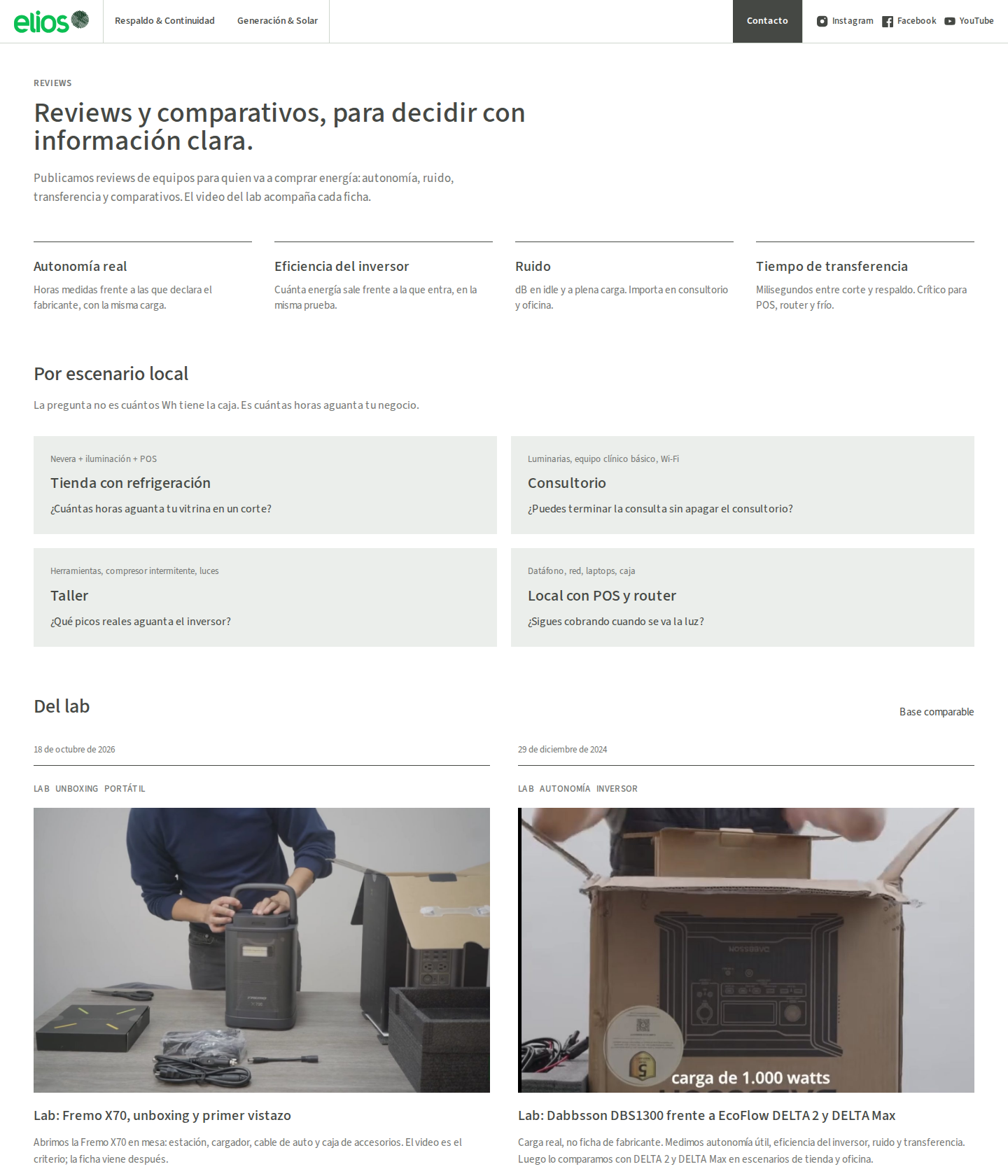
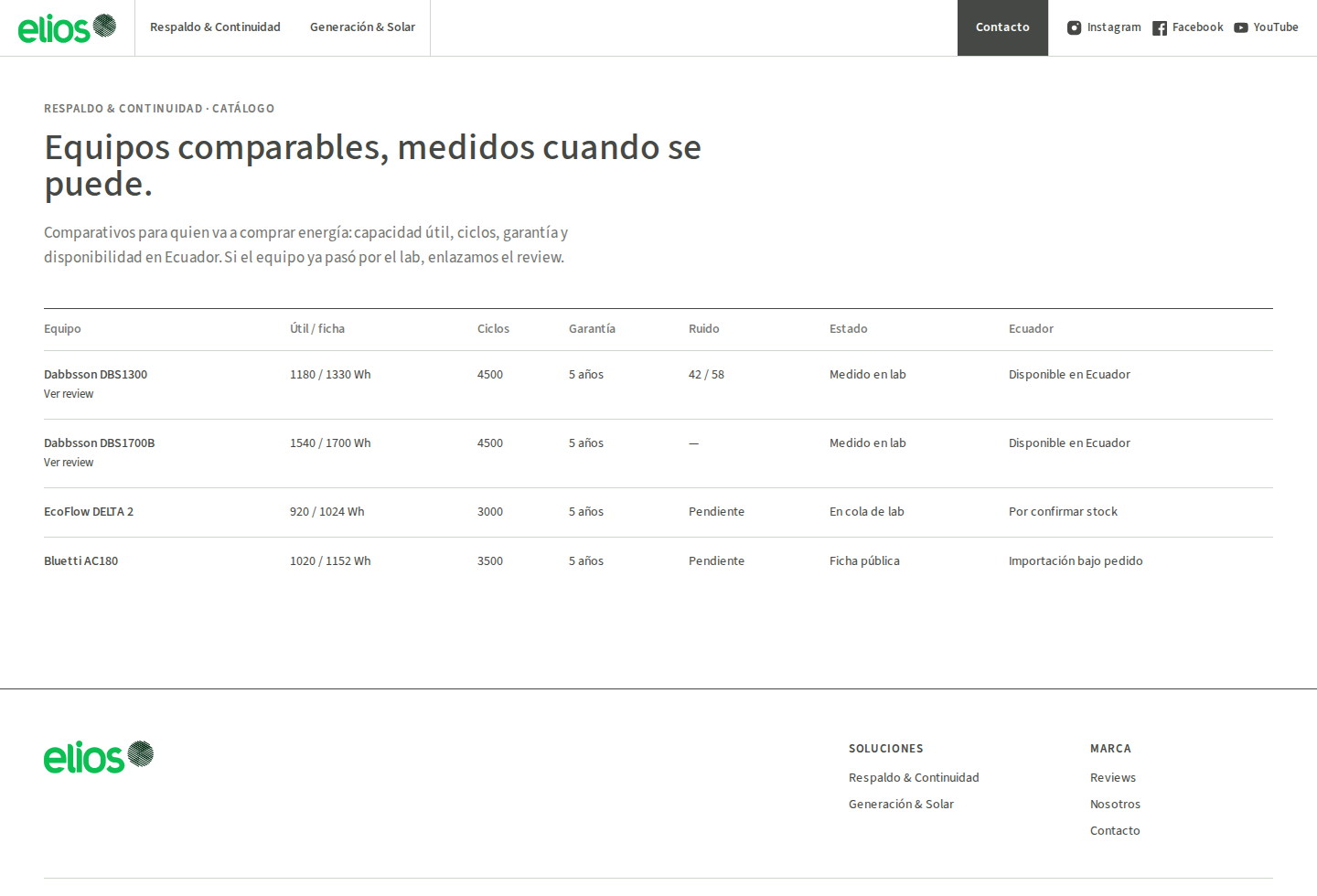
All technical specs and lab reviews are anchored to real-world commercial scenarios rather than isolated brand marketing. When a buyer compares capacity, cycle life, and noise levels across hardware, they see metrics tested in local conditions—like whether a specific inverter can power a dental clinic without interrupting a consultation.
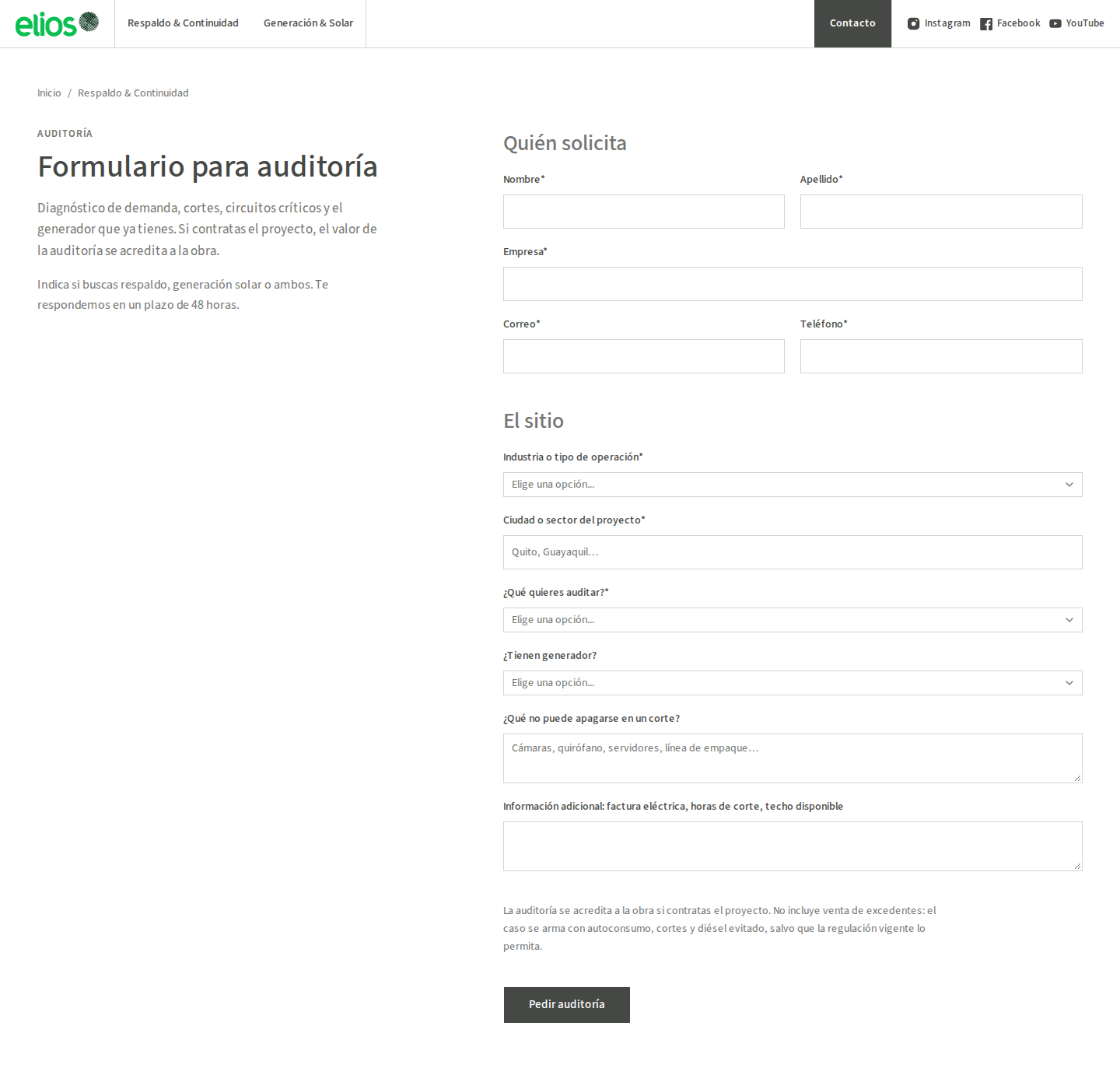
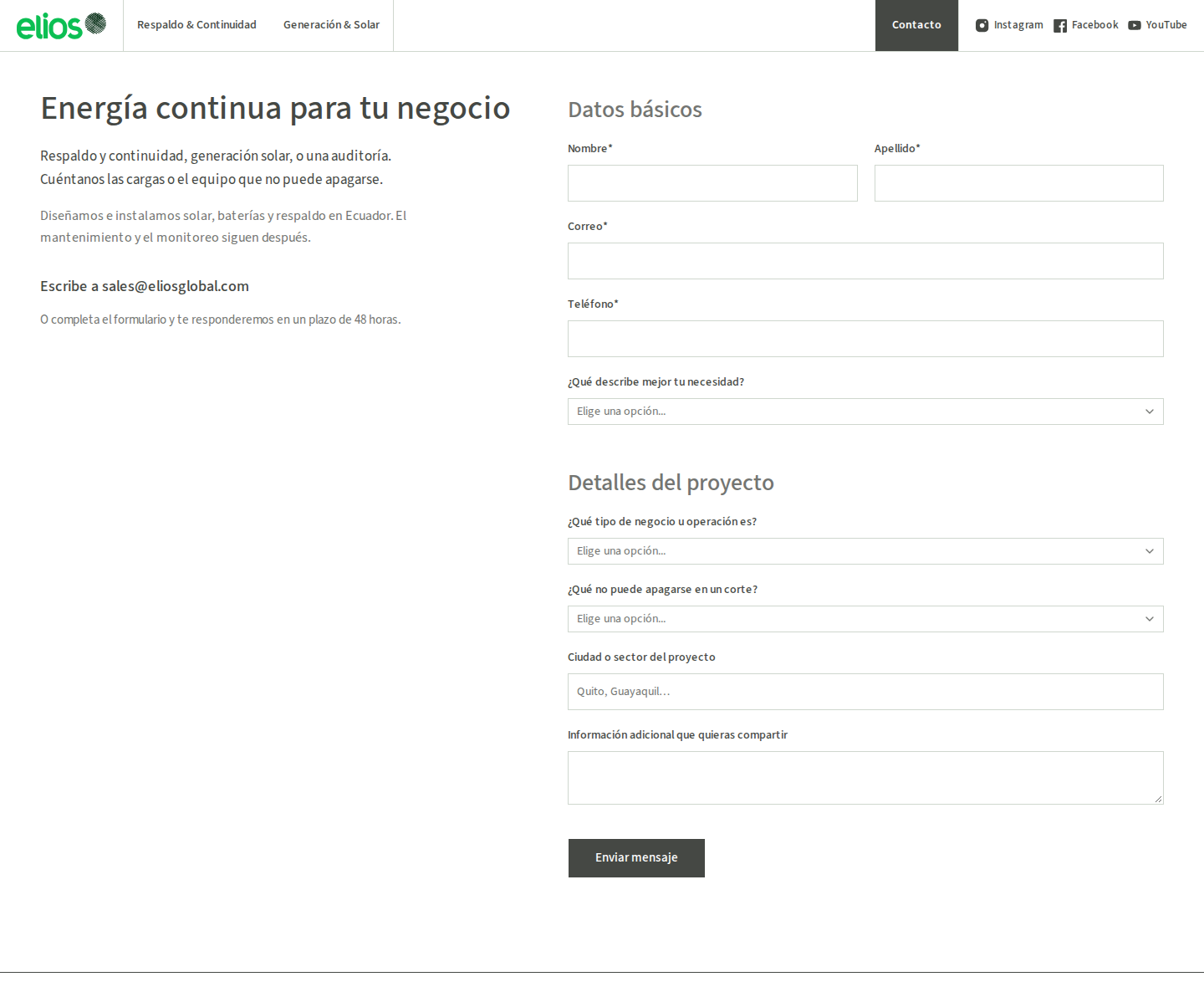
When the visitor finishes exploring the metrics and costs, the interface shifts from a guided wizard into a structured technical capture. If the financial case makes sense, the audit form captures specific operational parameters—like machinery that absolutely cannot shut down—and credits the diagnostic fee toward the final installation.
The site stopped explaining a holding company and started diagnosing a business problem. A clinic owner can type their industry, select backup, and immediately adjust the wattage of their medication fridge. The distance between a power outage and a configured solution is now exactly two clicks.


Strategy, design, content, growth, and AI operations.