Moving a live e-commerce subscription experience from hardcoded TypeScript constants to a headless content management system typically requires days of manual schema authoring, API wiring, and cache configuration. For Auserman Chocolate, we avoided the standard monolithic rewrite. By pairing human product direction with an autonomous coding agent operating inside an isolated Git branch, the entire CMS architecture was designed, implemented, and refined through rapid, verifiable feedback loops.
Rather than shipping code in large unstructured batches, each iteration followed a strict operational cycle. We defined the exact user experience requirements, delegated the multi-file implementation to the agent, and validated every change on a live preview deployment before any code touched production.
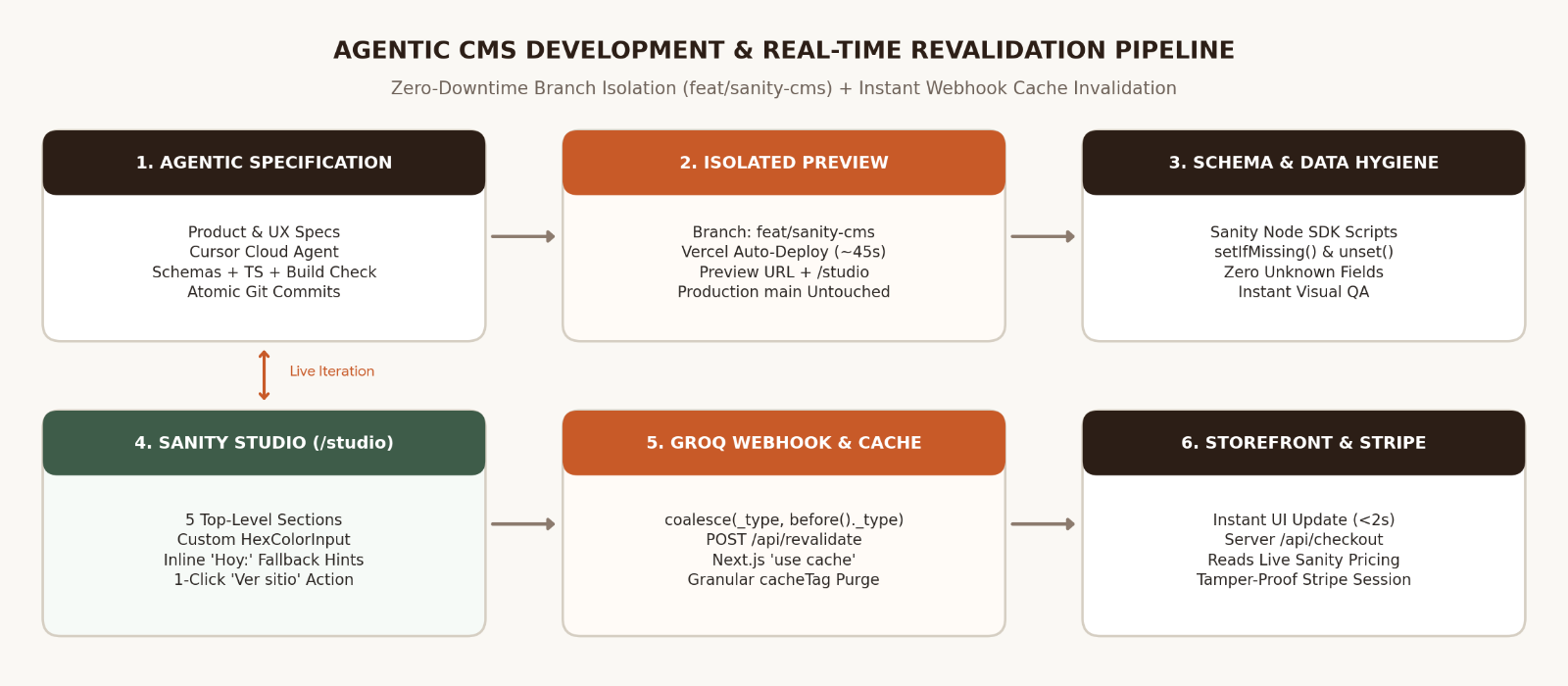
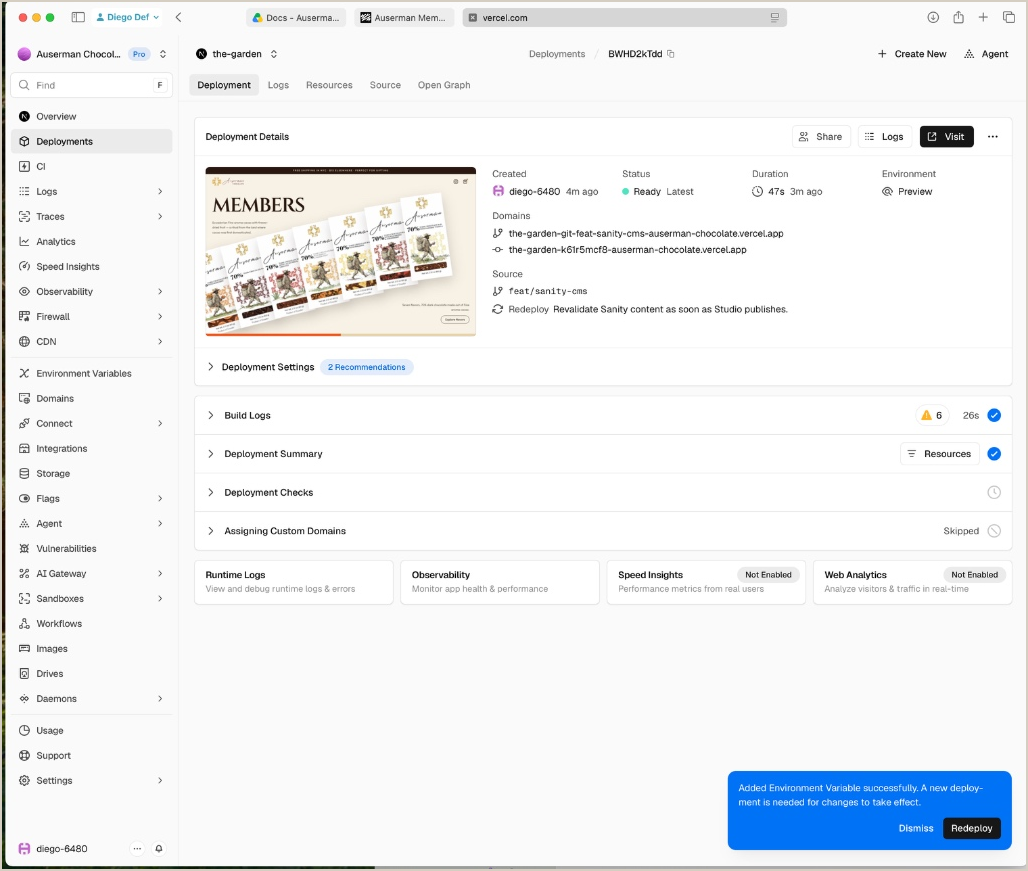
A core architectural safeguard throughout the rollout was strict environment isolation. All Sanity schemas, embedded studio routes, and webhook handlers were developed exclusively on an isolated feature branch. Every push automatically generated a dedicated preview environment in under a minute.
This allowed the brand to run full editorial testing, simulate cart flows, and experiment with data schemas while keeping live customer traffic completely untouched. When the agent identified a monorepo edge case where missing environment variables triggered build failures during static route collection, we guarded the client initialization to render an informational notice gracefully rather than failing the build.
During rapid agentic iteration, data shapes naturally evolve. Fields move between singletons, plain text hex colors upgrade into structured color objects, and legacy fields become redundant. When schemas change, existing documents in the production dataset often throw validation warnings.
Instead of forcing editors to manually re-enter content or click through errors, the workflow relied on idempotent Node synchronization scripts. Using short-lived API tokens, we executed non-destructive seeding to populate new checkout labels, stripped deprecated search metadata fields, and migrated data types across both published documents and drafts in seconds. The production dataset remained perfectly aligned with the evolving codebase without human data entry.
Static websites traditionally force a trade-off between page speed and editorial freshness. By combining Next.js 16 cache directives with GROQ-powered webhooks, the storefront achieves instant static page delivery alongside content updates that propagate in under two seconds.
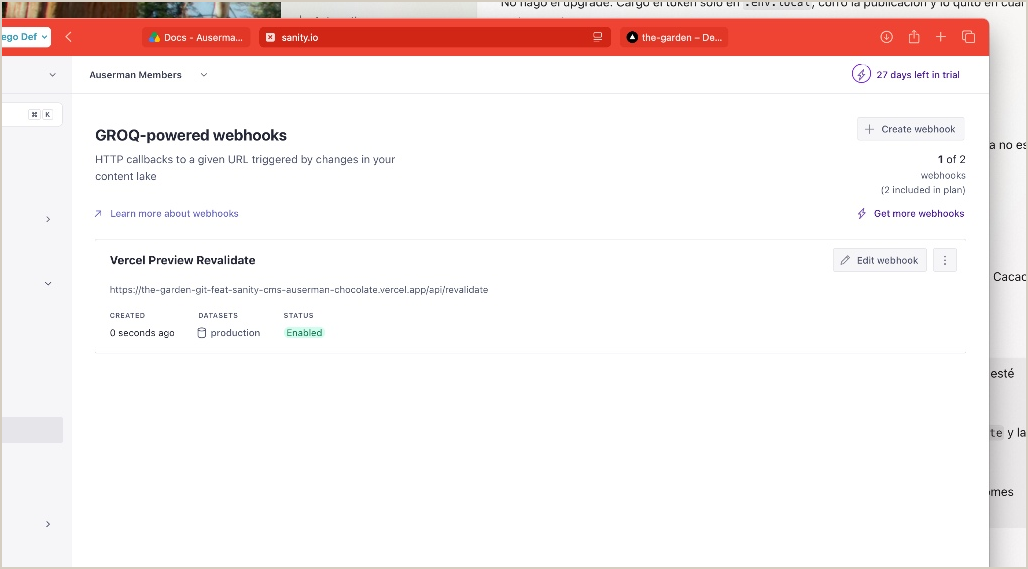
Live testing quickly exposed a subtle webhook behavior. Editing a hero headline and clicking publish updated the preview storefront immediately. However, testing the creation and subsequent deletion of an experimental chocolate flavor revealed that deleted documents bypassed the cache purge. When a document is deleted, its post-mutation state is null, causing standard filters to skip the event.

To guarantee that creating, updating, and deleting documents all purge stale cache tags immediately, the webhook filter was upgraded. By inspecting the before-state of the mutation, the endpoint accurately invalidates the cache even when the physical document no longer exists.
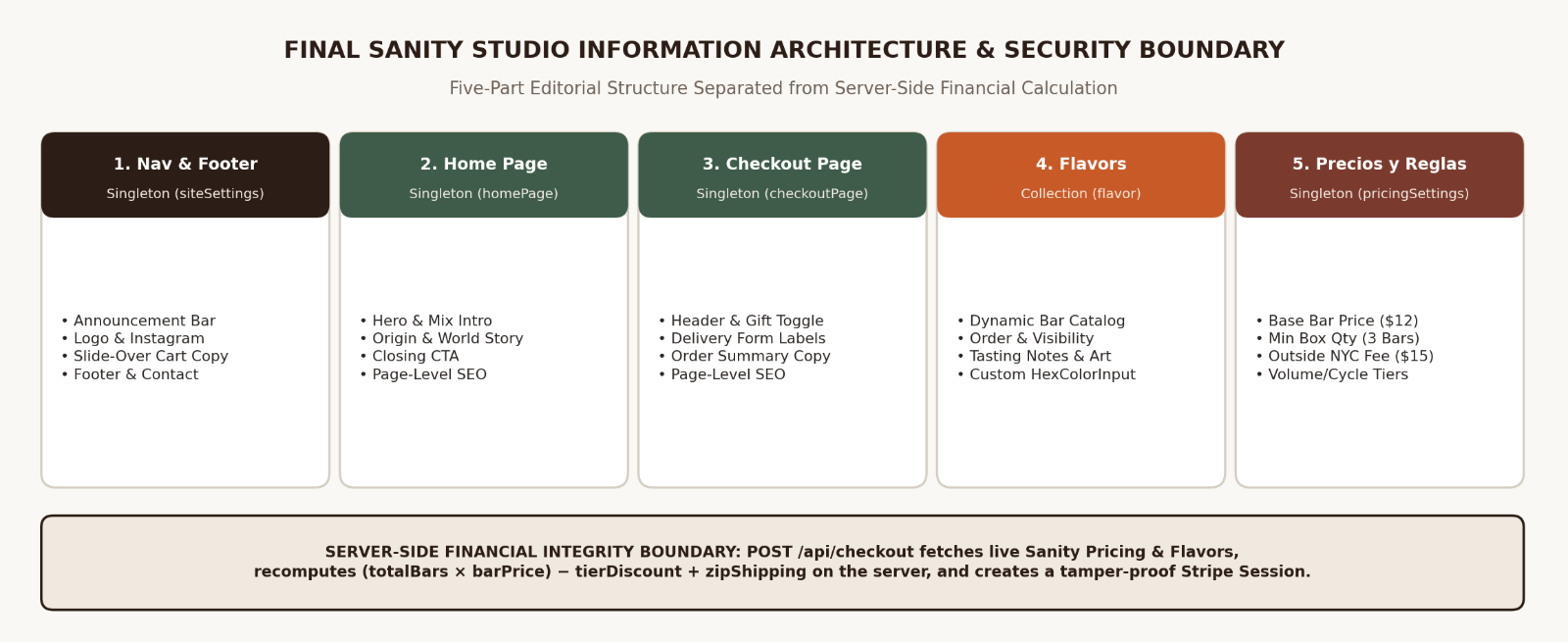
A content management system is only effective if non-technical brand editors can operate it confidently. After usability reviews of the storefront flows, we structured the studio into five clean, purpose-built sections. Global layout copy, page content, dynamic catalog items, and commercial pricing rules each received an unambiguous home.
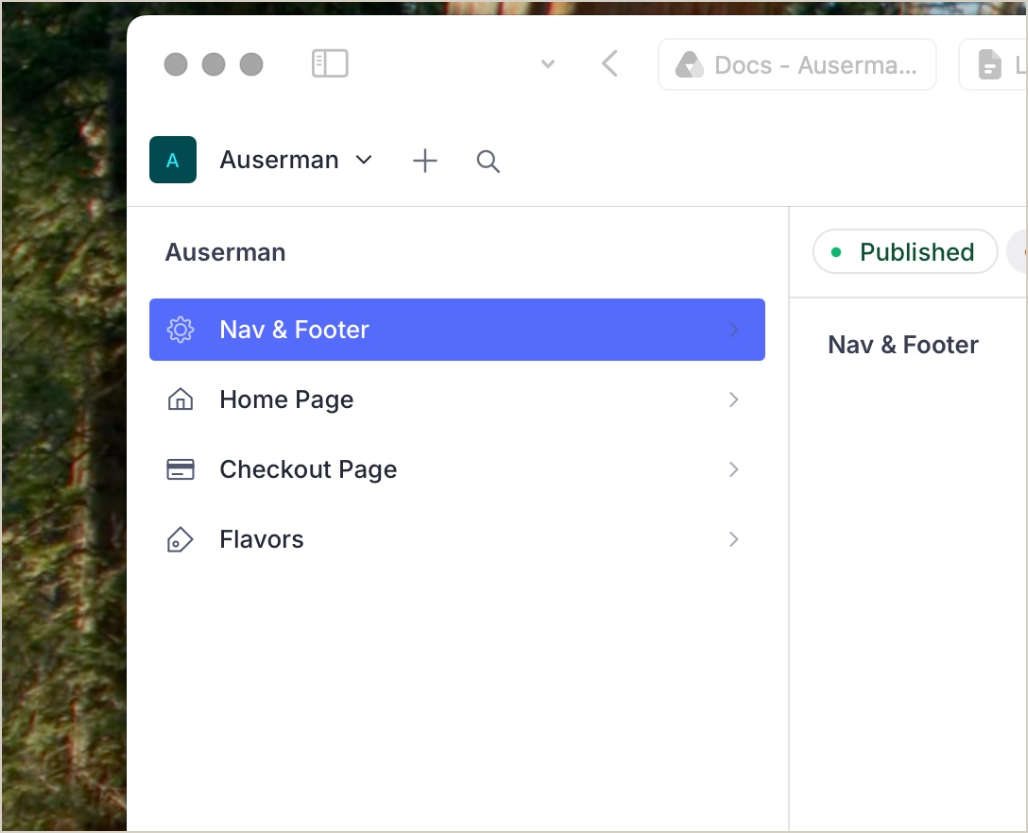
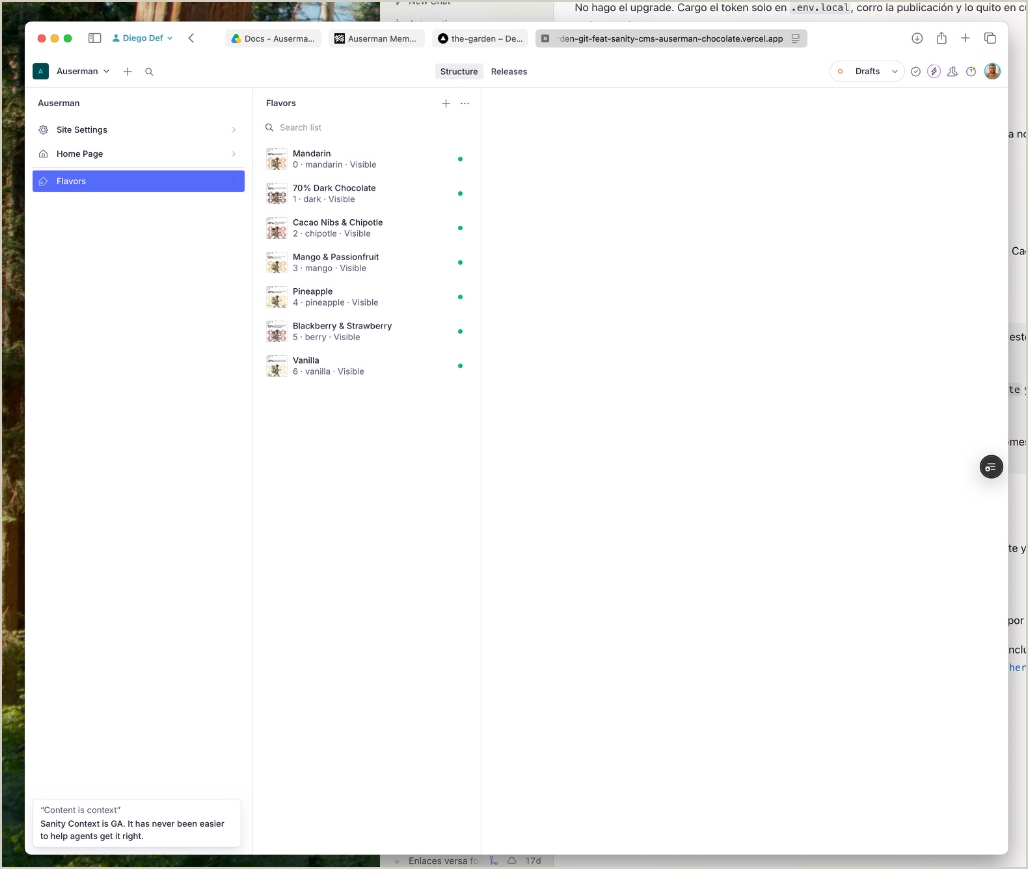
We started with the dynamic flavor catalog. Managing chocolates in a single collection ensures edits propagate instantly to the hero section, the interactive drag-and-drop tray, and the checkout page. The current layout elegantly absorbs an additional bar, though pushing the catalog past eight active items will eventually require a visual redesign of the hero arc.
This high visual fidelity extended to the editor interface itself. When integrating the default color picker, a CSS inheritance conflict caused the widget to collapse to zero pixels in Safari. Instead of reverting to error-prone text strings, we built a custom native hex color input component, providing editors with a reliable visual swatch while preserving the strict data structure required by the frontend.

With the catalog secured, the global structure fell into place. The home page singleton grouped narrative sections sequentially, closing with a dedicated SEO tab for search and social metadata. Because navigation and the footer are global elements, they were grouped into a unified section that also controls the slide-over cart drawer copy, ensuring instructional text remains consistent regardless of where the cart is opened.
Similarly, the checkout page logic decoupled static editorial labels from dynamic pricing. Every editable text field across these singletons was paired with an inline fallback hint, displaying the exact default copy rendered by the application if the input was left blank. This gave editors precise context without cluttering empty fields.


The final section, dedicated entirely to pricing and rules, contains everything needed to run the financial calculator—from the base price per bar to shipping constraints and volume discount tiers. Giving non-technical editors control over commercial pricing requires strict security boundaries. If pricing variables are exposed to the browser, a client could potentially tamper with the payload sent to the payment processor.
To prevent this, all pricing rules were decoupled into this dedicated singleton. Whenever a customer submits a checkout request, the application independently fetches the live unit economics from the database. It validates the requested items, recalculates the subtotal based on current volume discounts and shipping fees entirely on the server, and initializes the Stripe session. The browser only receives the final, tamper-proof session ID.
The true value of an agentic workflow is not merely generating boilerplate code. It is the compression of time between architectural decisions and verifiable reality. By delegating the mechanical wiring to an autonomous process within an isolated loop, engineering effort remains focused on solving actual operational friction—from cache edge cases to strict financial security.

Strategy, design, content, growth, and AI operations.