Context usually lives in slide decks. In an agency juggling multiple brands, the business reality of who buys, what hurts, and who competes often scatters across chat histories and isolated documents. The classic symptom of this fragmentation is generic content—articles about abstract digital transformation that never name the specific friction a buyer faces. When a client asks if Gemini or ChatGPT mentions them, the answer is anecdotal at best. We needed a system to operationalize this context, force production to anchor to it, and measure AI search visibility without guessing.
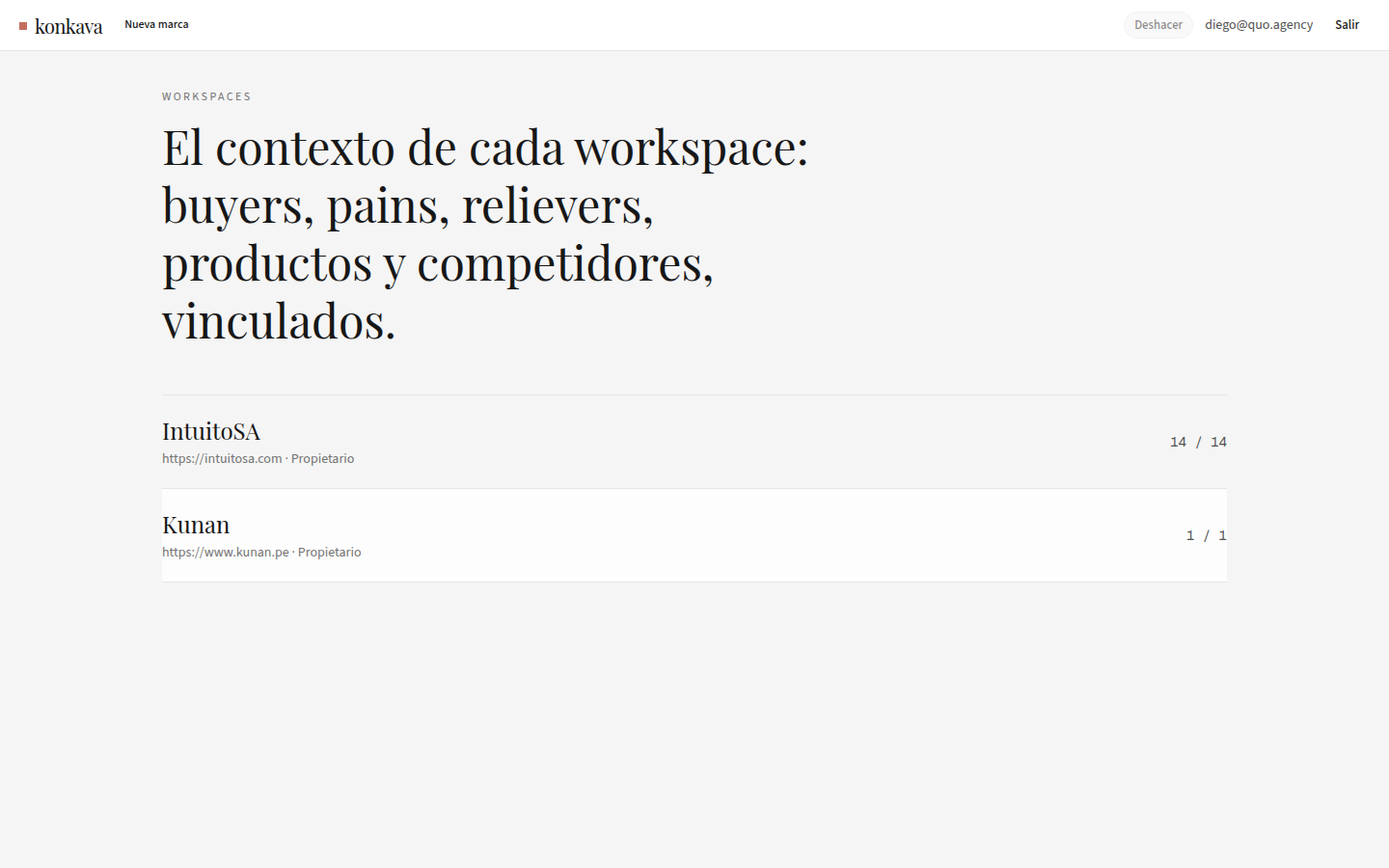
To prevent cross-contamination between clients, the architecture requires absolute isolation. Mixing brands in one content system leads to bleeding context. A workspace in Konkava represents a distinct brand. In production, this separation is enforced via Supabase row-level security (RLS), ensuring that the context of a tax software client like IntuitoSA never intersects with a completely different market, such as a social entrepreneurship fund.
Business context is not a text document; it is a relational dataset. We structured the core application around a market graph consisting of buyers, pains, relievers, own products, and competitors. Built on Next.js and Supabase, the system uses bidirectional linking. Tying a manual download pain to an accounting buyer instantly updates the data on both sides of the relationship.
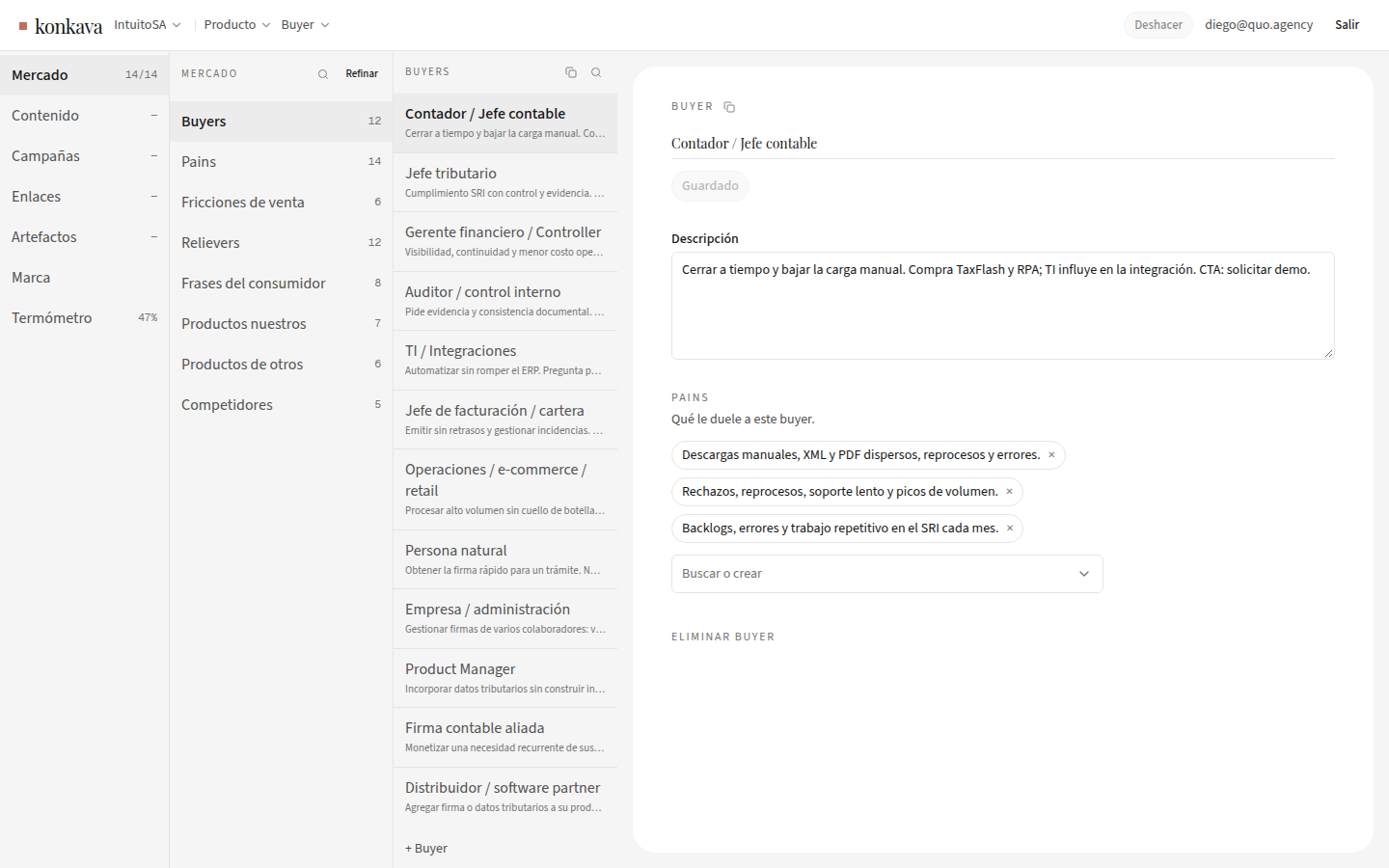
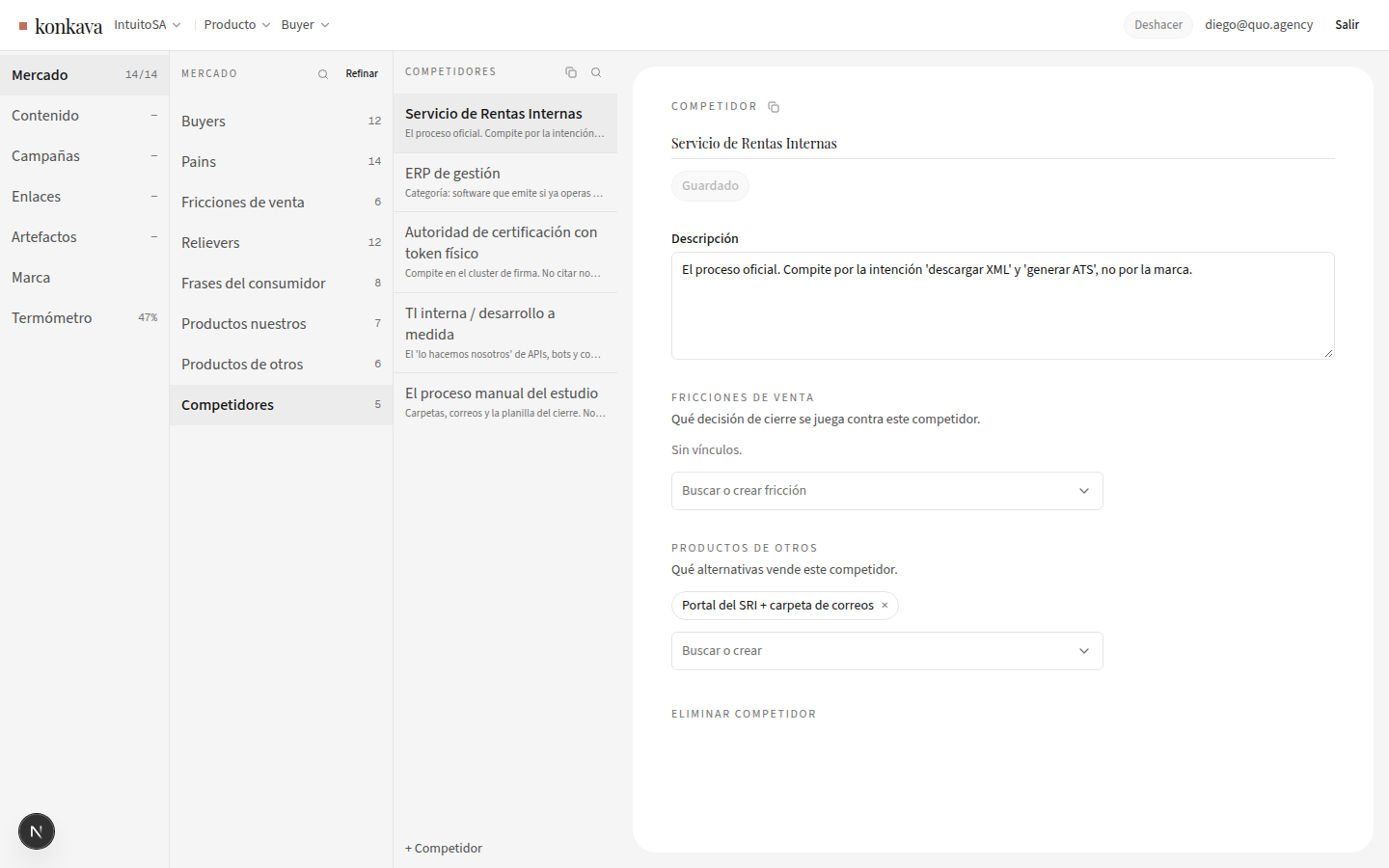
Every entity feeds the next. A product like TaxFlash brings its own specific relievers into the graph. By mapping competitors, we acknowledge that the alternative to our software is often an internal manual process or a free government portal, not just another vendor. We also catalog consumer phrases—the exact queries a buyer types into search—and pin them directly to a recognized pain point.
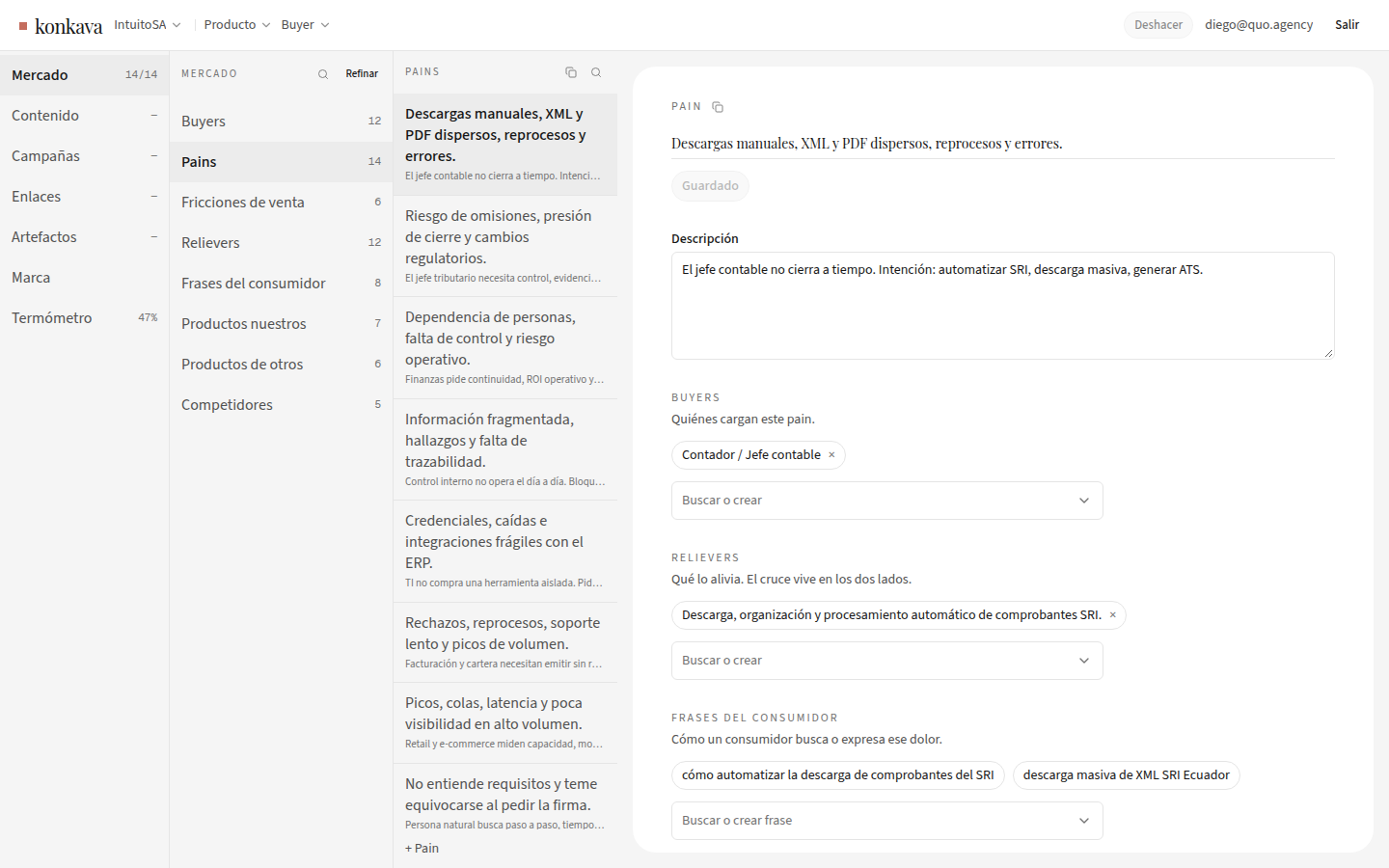
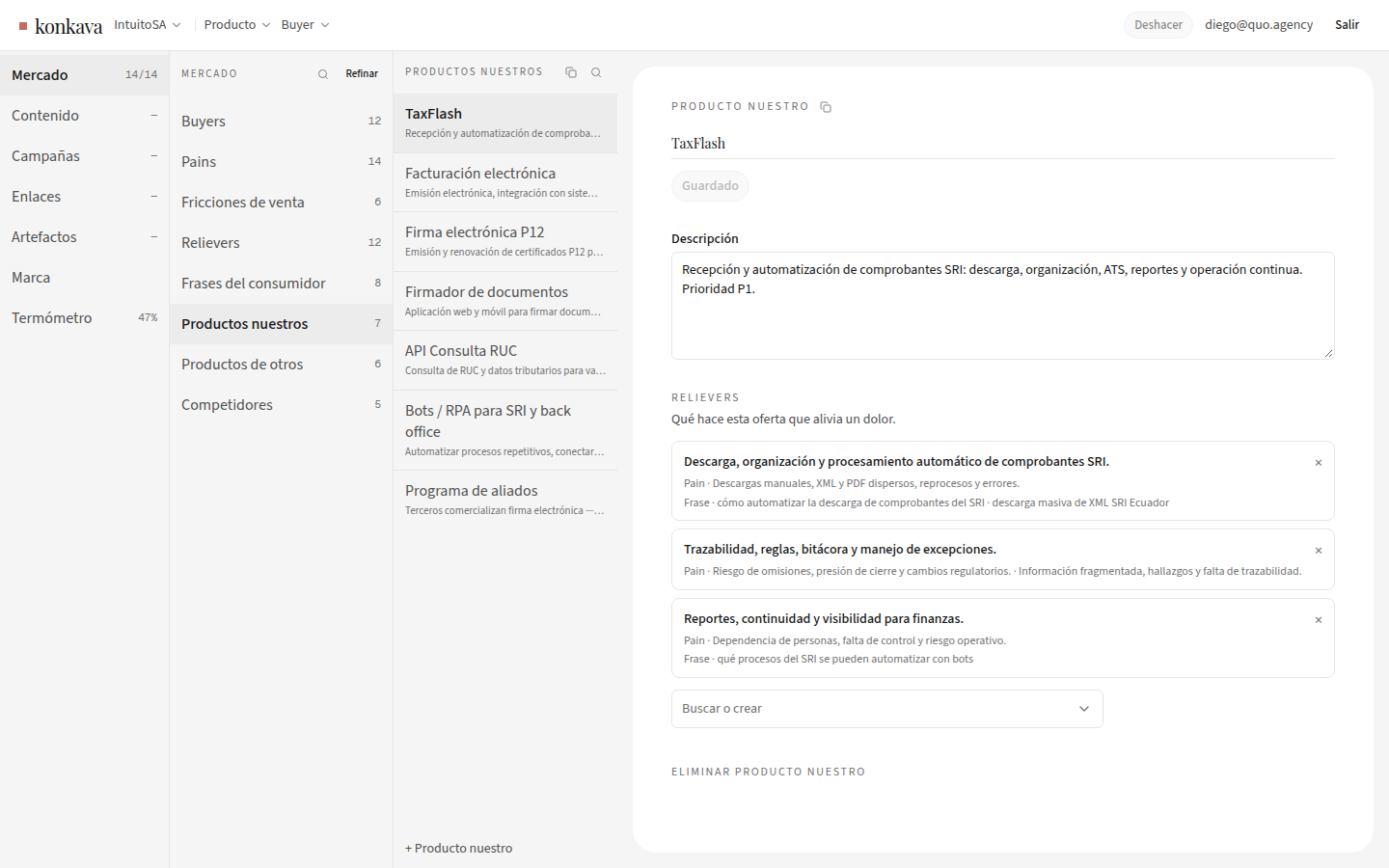
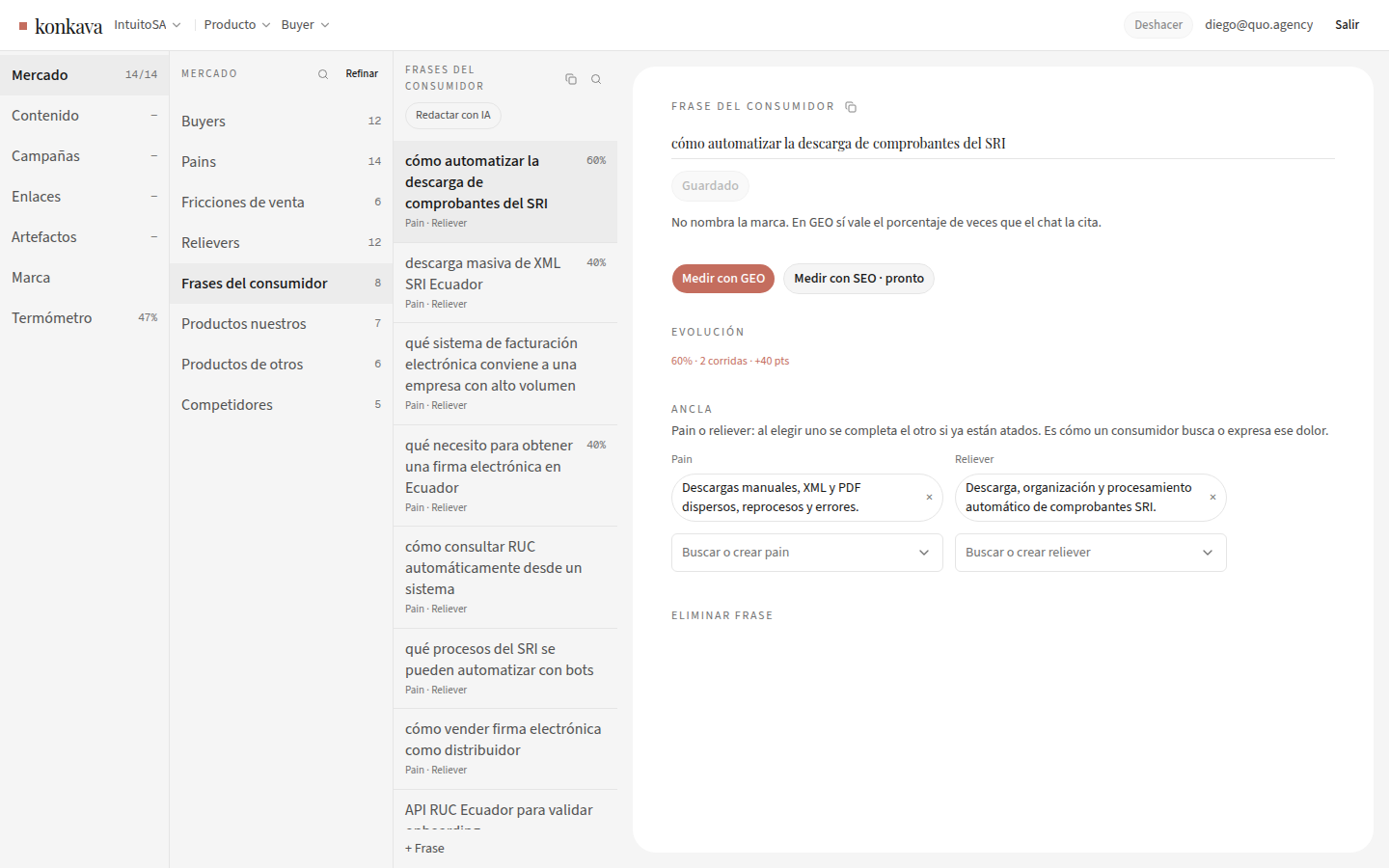
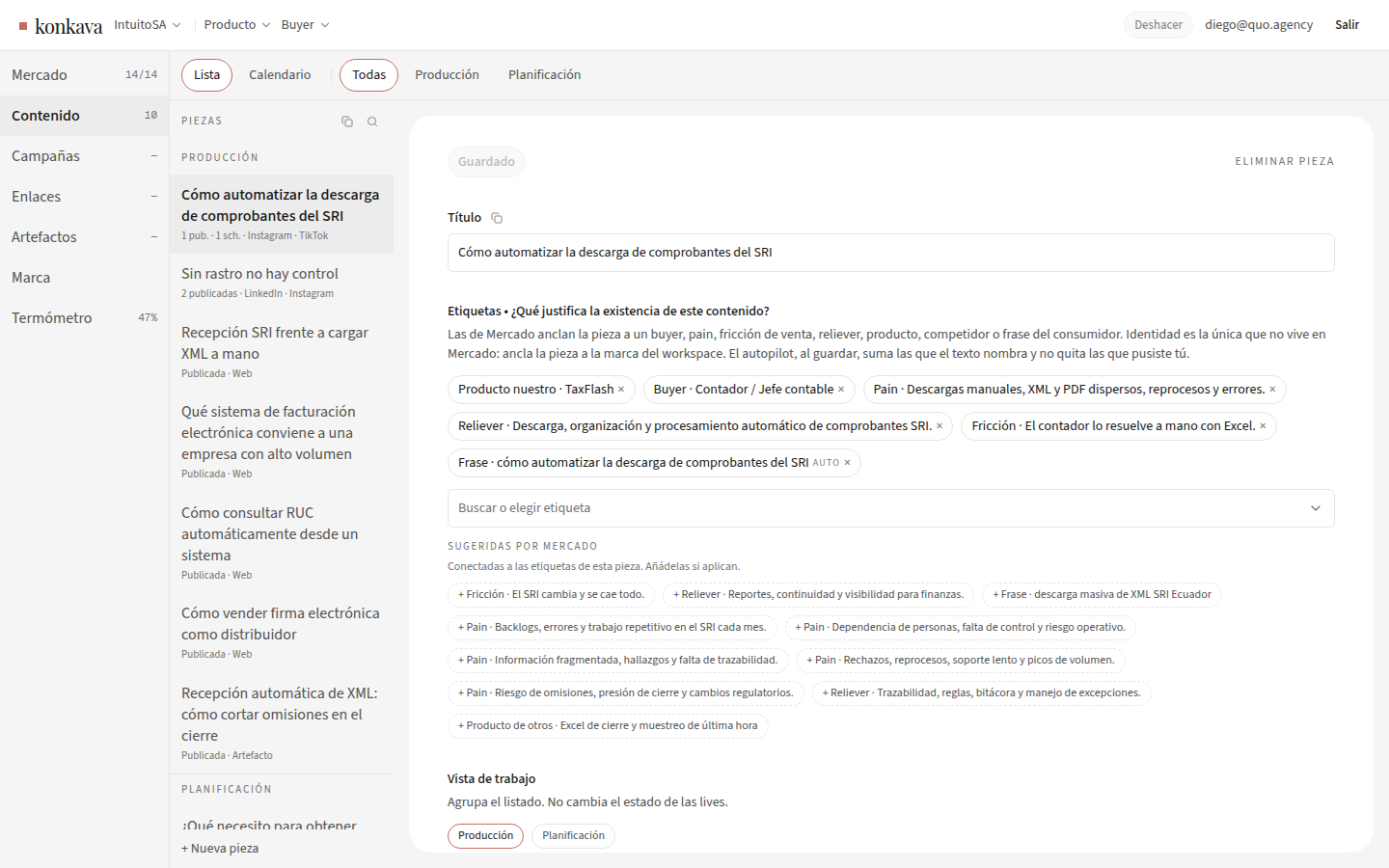
When a content piece is drafted, it is not tagged with arbitrary text strings. It is anchored directly to the database IDs of these market rows. If the pain is manual XML downloads, the content must directly address the automated reception reliever. This constraint forces the production team to write for a verifiable business case, organizing these live pieces in an integrated editorial calendar.

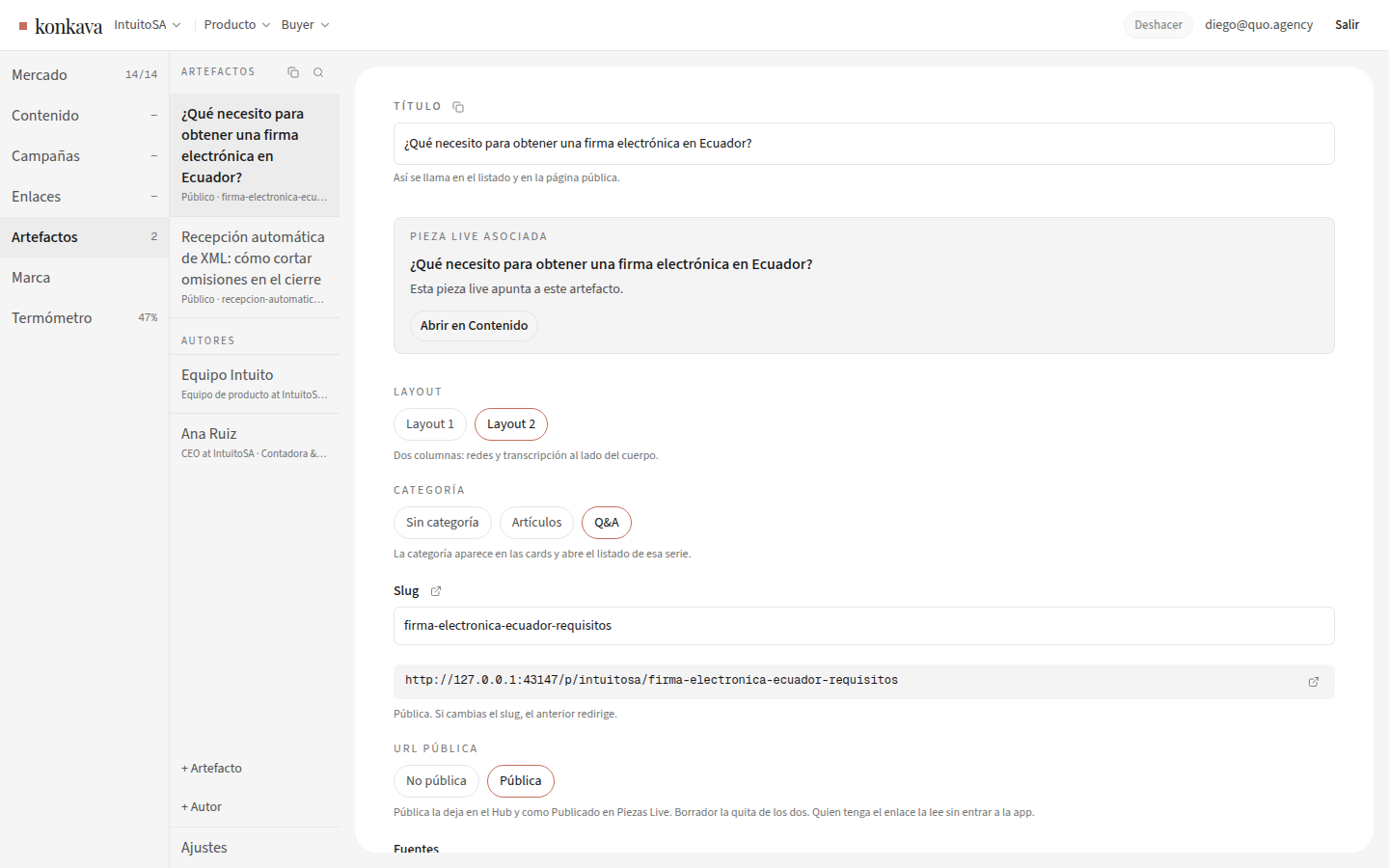
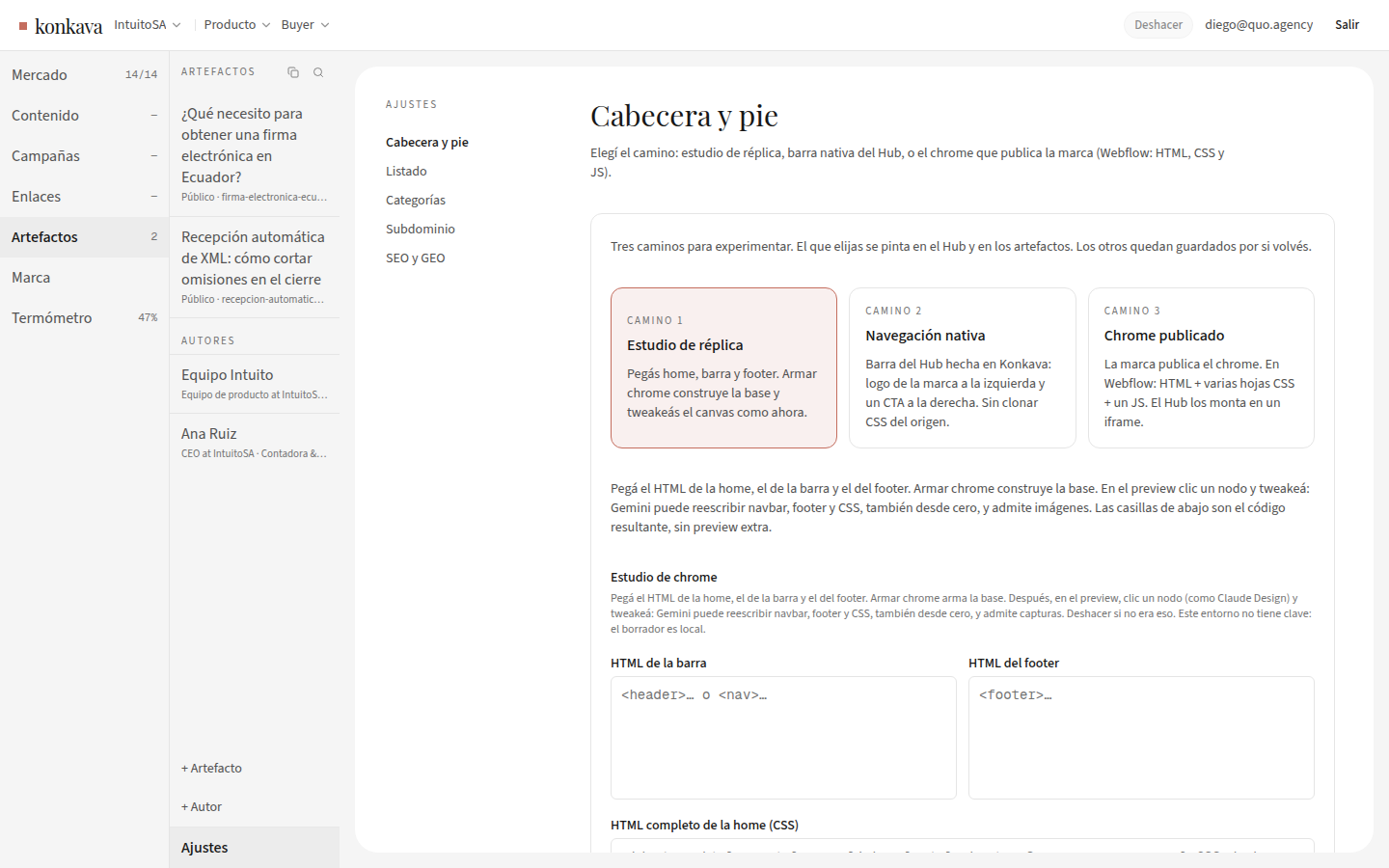
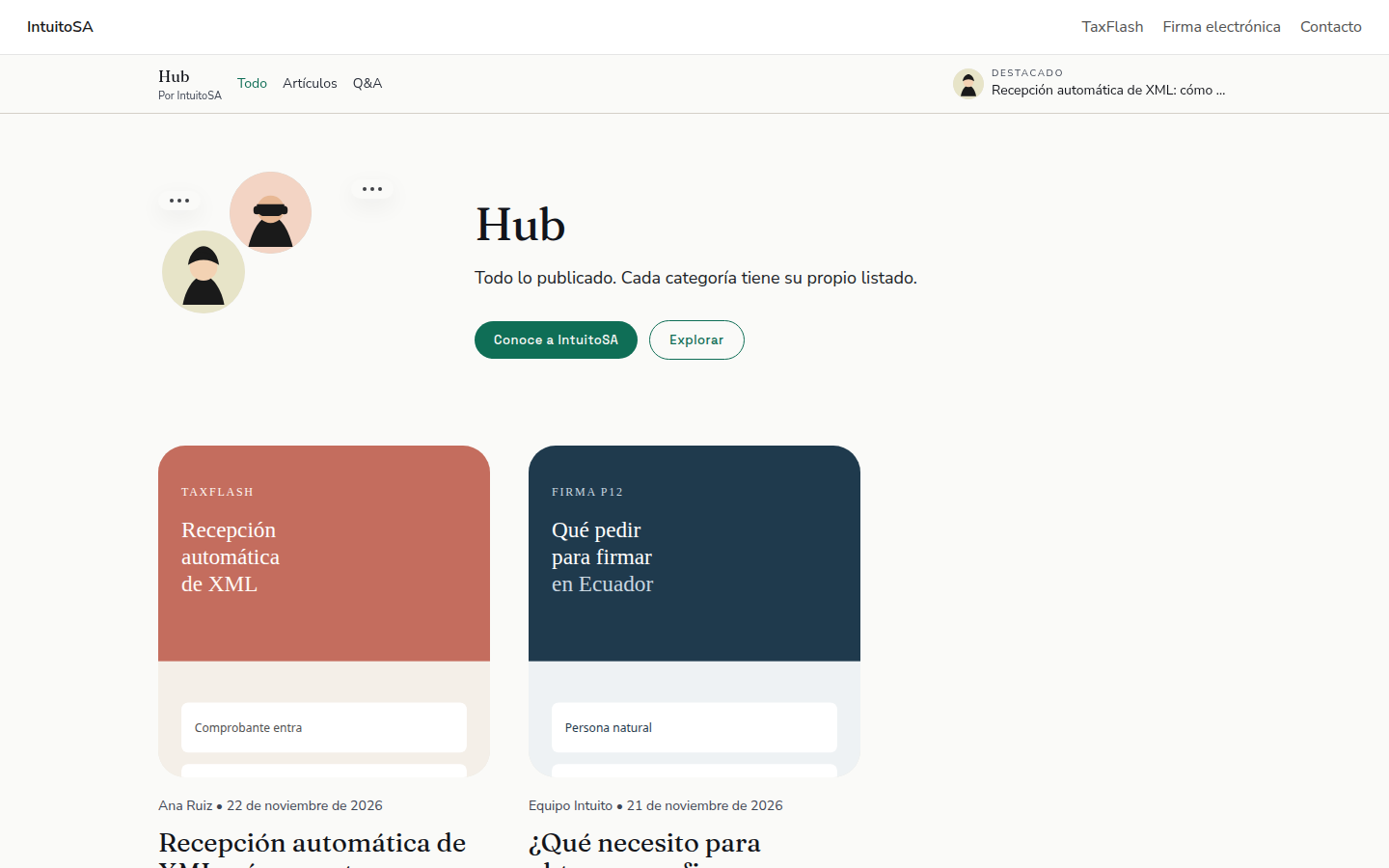
Finished content pushes to a public Hub. However, the agency interface cannot bleed into the client's public presence. Konkava supports custom chrome injection, allowing the Hub's header and footer to replicate the brand's exact HTML, CSS, and typography. A visitor reading an article sees the client's domain and visual identity, completely unaware that an internal agency tool serves the page.
The ultimate test of this graph is measurement. Using a GEO thermometer built on Gemini Flash Lite and Google Search, the application tests the exact consumer phrases tied to these mapped pains. We do not prompt the model to mention the brand; we send the query organically and measure if the brand appears naturally as a source against its documented competitors. In one automated run, an IntuitoSA query returned a 47 percent citation rate while correctly identifying the government tax portal as the primary competing source.
Konkava does not promise that a brand will automatically win AI recommendations. It ensures that an editorial team stops improvising the business context, publishes with intentional anchors, and measures chat citations against a verifiable baseline rather than isolated screenshots.


Strategy, design, content, growth, and AI operations.