The market does not reward loose prompts. It rewards teams that treat agentic workflows as engineering layers subject to strict architectural contracts. For Koolmax and Supakool, two HVAC merchants in Trinidad and Tobago, the operational directive was clear: maintain a single OS 2.0 theme shared across both stores. To achieve this without manual synchronization overhead, the AI required explicit boundaries. Hardcoded logos and fixed color palettes were banned in favor of dynamic schema structures.
To prevent context degradation during development, system bounds were codified directly into the project repository. The agent was restricted to existing theme CSS tokens, strict Shopify Theme Editor schemas, and sanitized integration payloads. Rather than generating isolated layout guesses, the agent executed automated visual verification against a live storefront preview, actively evaluating its own interface proposals against the base design system.
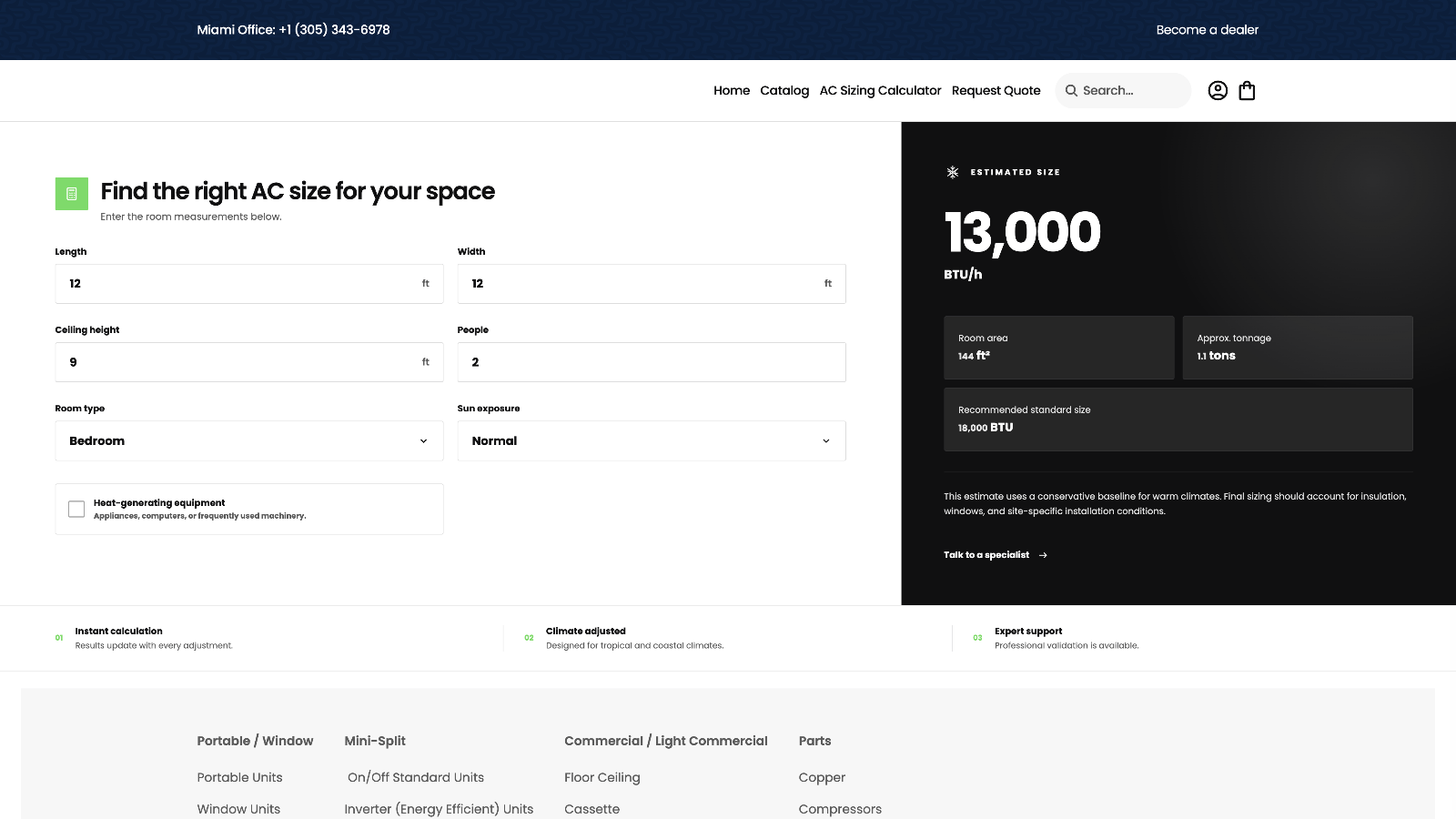
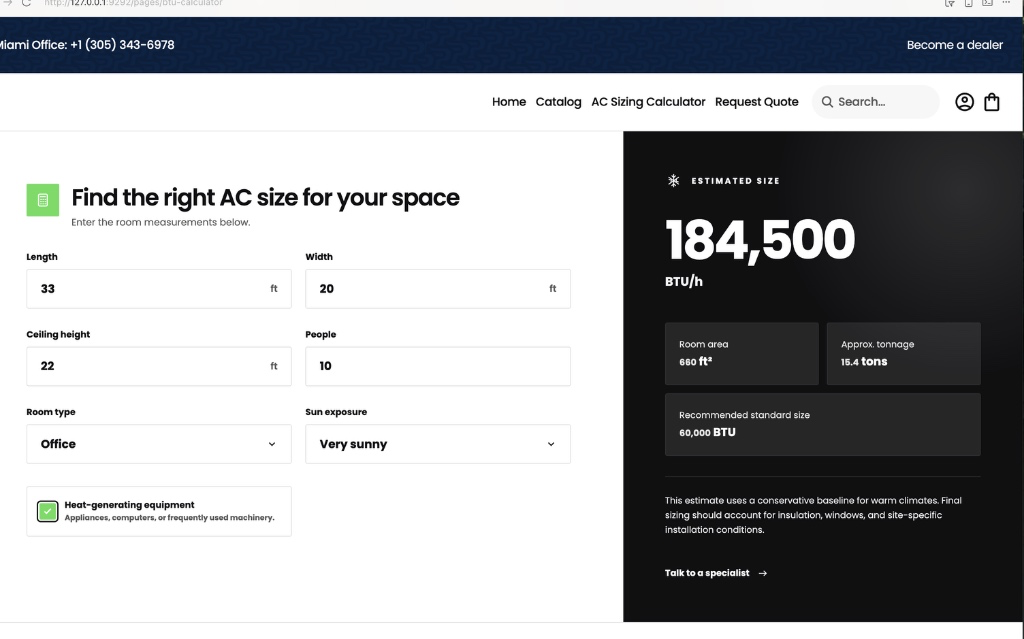
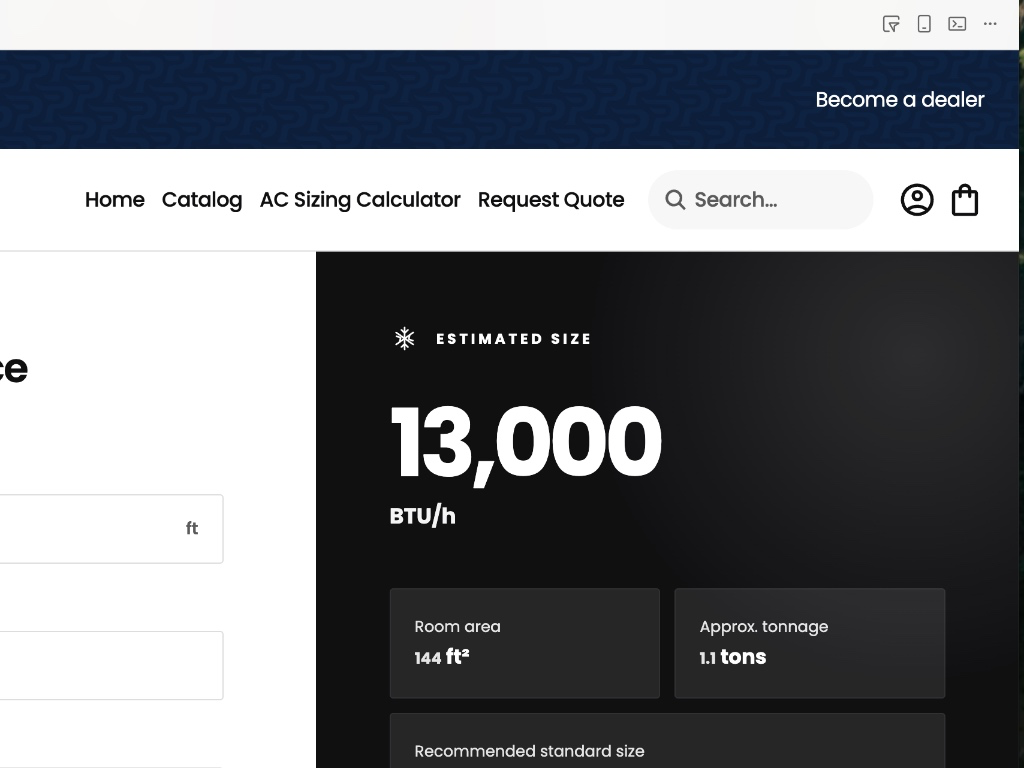
HVAC customers rarely know their exact cooling requirements before purchasing. Guiding them requires an interactive sizing tool. However, deploying an embedded client-side framework just for this component introduces unnecessary rendering penalties. The requirement was a drag-and-drop native section built strictly with Liquid, schema definitions, and vanilla JavaScript.
During implementation, the production Theme Editor compiler failed to process standard stylesheet tags properly, resulting in oversized vector artifacts. The agent diagnosed the compilation limit and pivoted to injecting inline style blocks at the top of the Liquid file, preserving rendering speed and merchant editability.
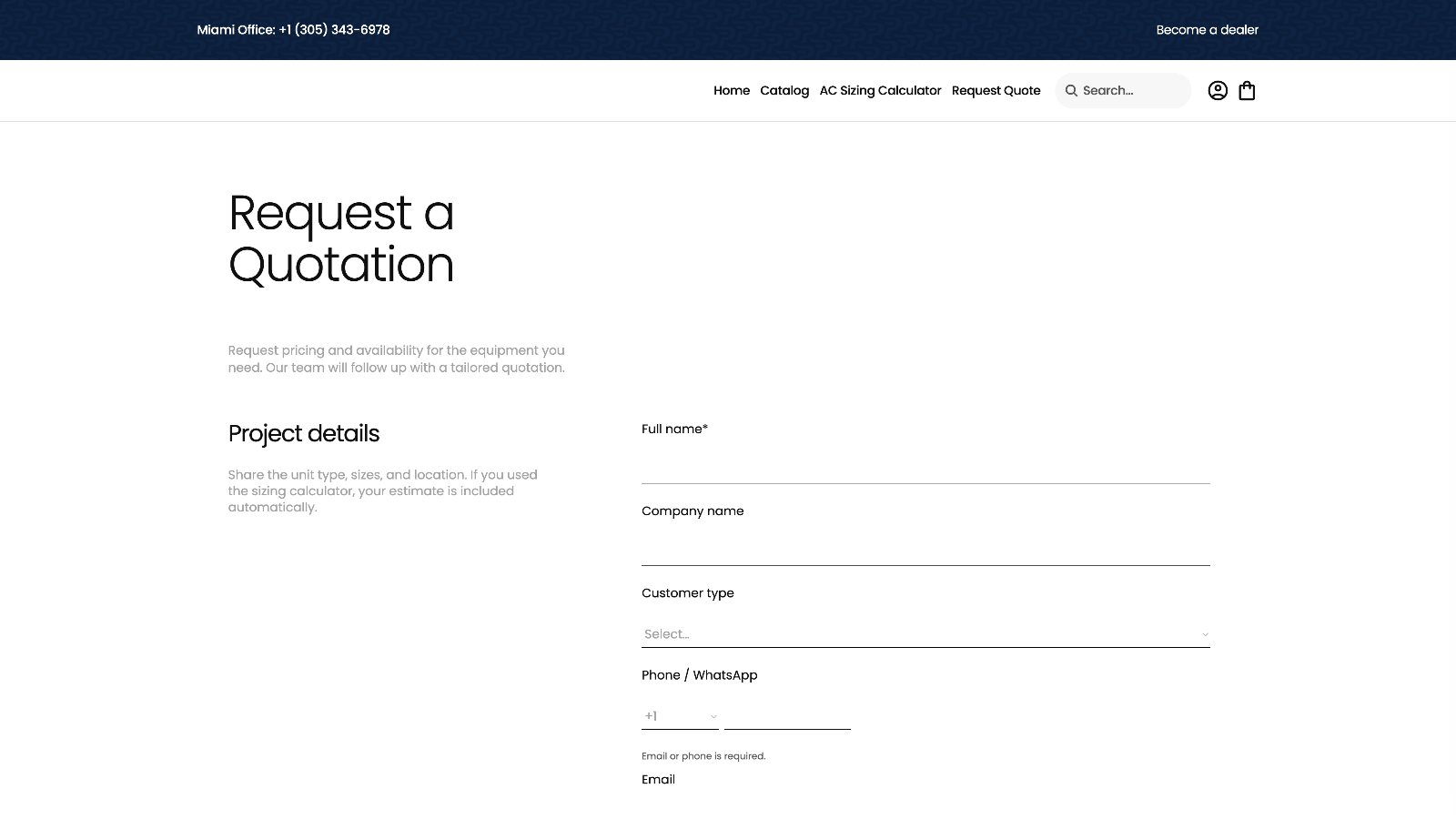
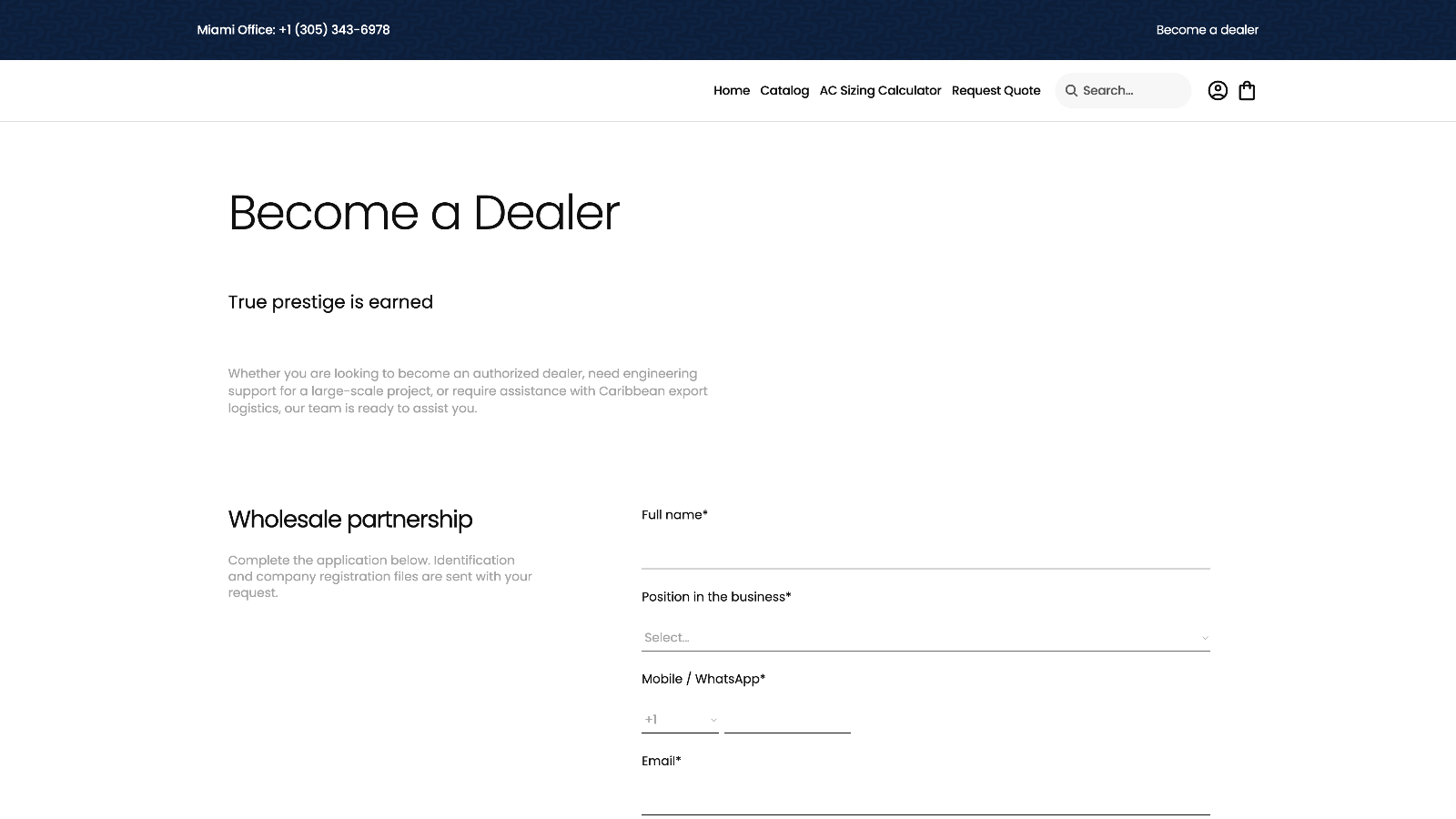
This native approach extended to existing storefront elements. The standard wholesale inquiry structure was adapted into a dedicated dealer application. To respect external integration limits, file upload mechanisms were optimized to pass lightweight file names in the message payload rather than processing oversized base64 strings.
Quotations and dealer applications generated on the storefront must route directly into Eureka ERP, the merchants' back-office system. The technical brief demanded a strict JSON payload and a private authentication header. Upon reviewing the proposed architecture, the agent flagged a critical vulnerability: executing a POST request directly from the client browser would expose the API key to the public storefront.
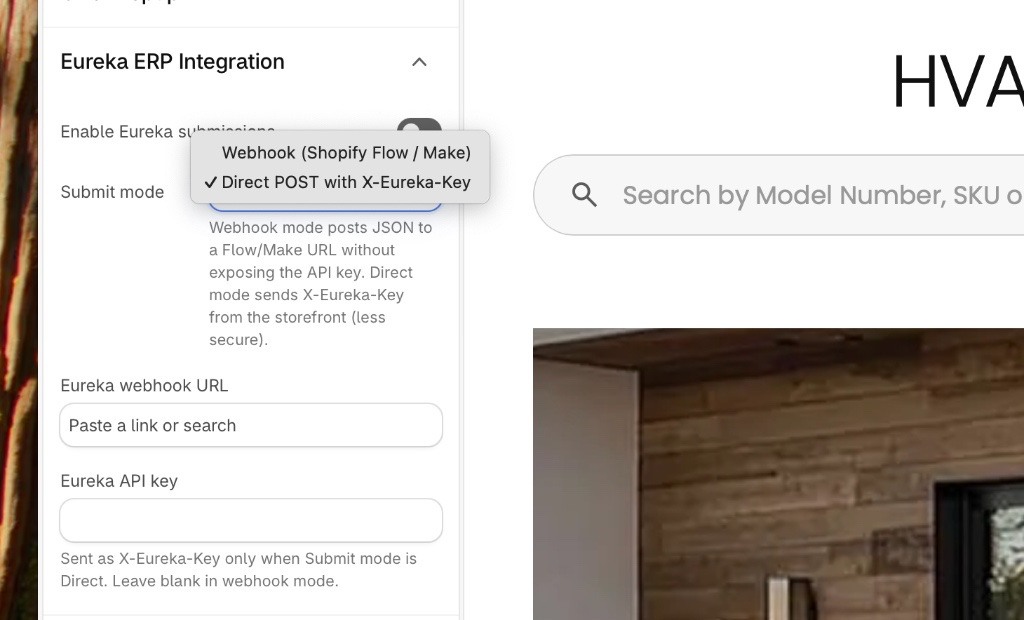
To secure the payload, the submission architecture was refactored. The settings schema was modified to toggle between a direct development mode and a secure production webhook. In the live environment, Shopify Flow acts as an intermediary, securely passing the authentication header from server to server.
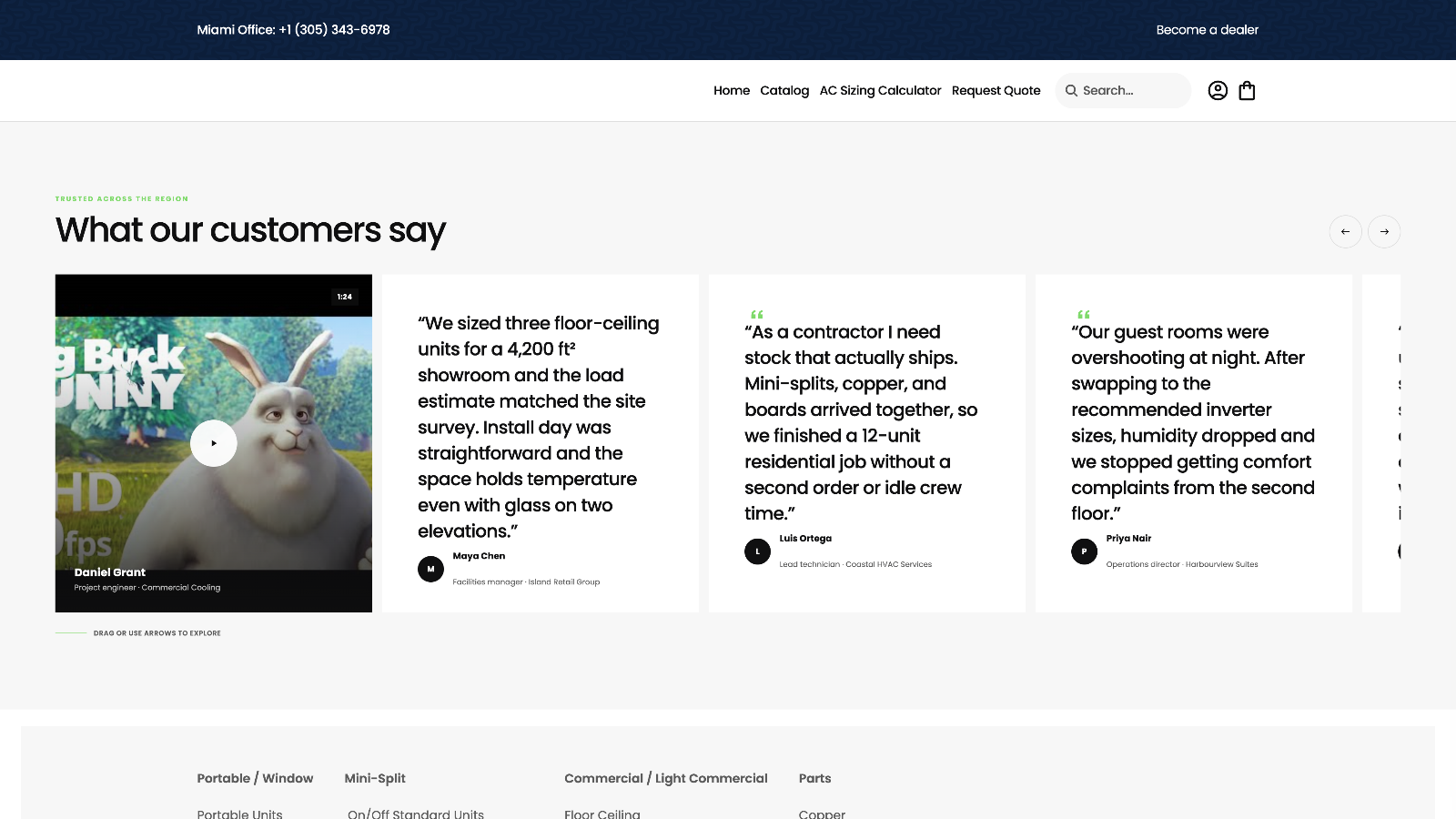
During end-to-end verification of the quotation pipeline, the initial submission returned a gateway failure. When faced with execution errors, naive agents often hallucinate internal logic flaws. Instead, the workflow was forced to analyze the raw network trace.
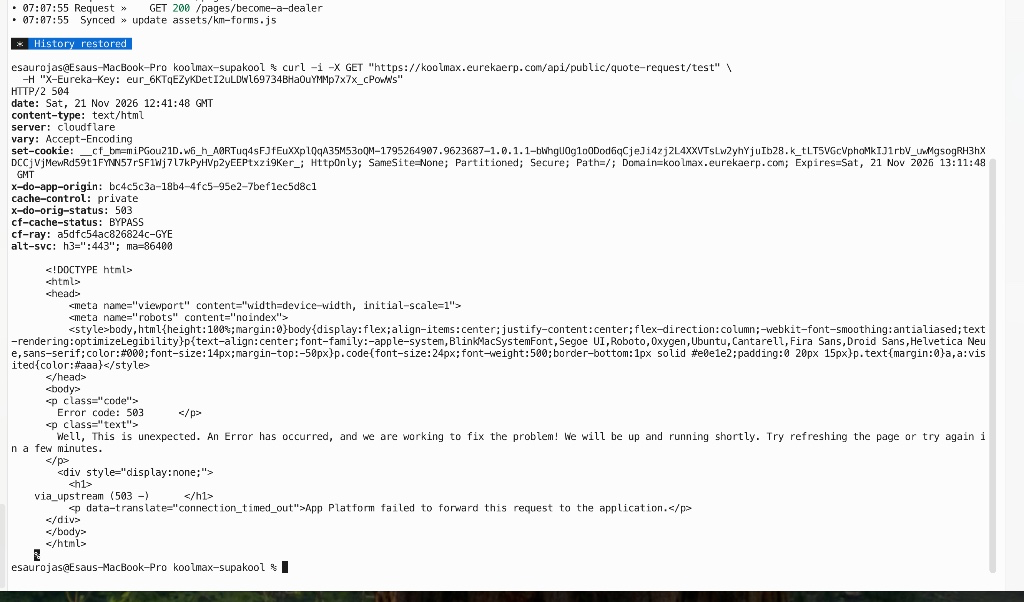
The trace analysis confirmed the payload structure was perfectly sound. The failure originated from a 503 upstream error on the client's inactive cloud infrastructure. Identifying this instantly allowed the team to pivot away from debugging valid code.
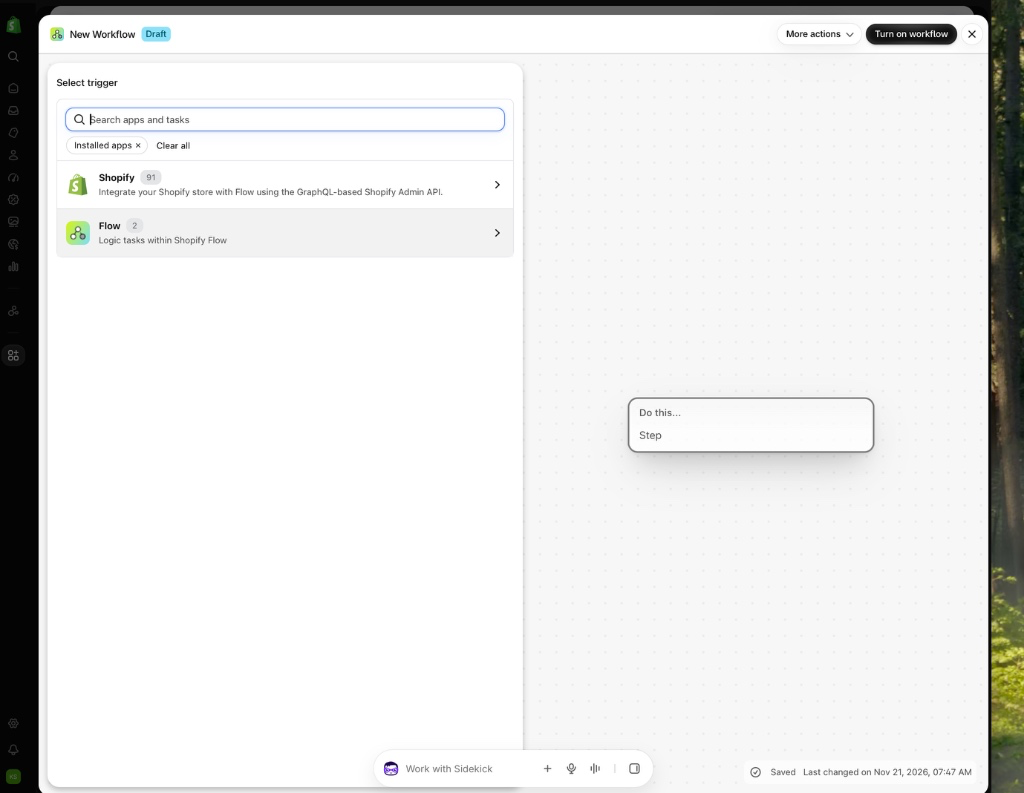
We configured the Shopify Flow bridge to reliably queue those requests until the upstream service recovered. What began as a directive to unify two storefronts proved a broader operational truth about agentic workflows. An AI layer does not replace the need for rigid architectural boundaries; it requires them to function. Loose prompts generate noise. Strict contracts ship software.


Strategy, design, content, growth, and AI operations.