Ecuador & Latam


This is what happens after one month of campaigns that are supposed to work as one system: SEO, GEO — appearing when someone asks an AI — social, and Google Ads. The website is in the picture even if we are not rebuilding it this month. It still receives what the other channels learn.
The company is B2B. Intuito sells TaxFlash, software that pulls withholding receipts and other SRI records in bulk so accounting teams can work the data instead of downloading it by hand. Everything below is interconnected. You can start the story from Google, from the hub, or from a video. We start with Google Ads, because that is where purchase intent shows up first.
The first job is leads with intent to buy. Search is the person typing the thing that hurts, right now. That is different from a social campaign, where the pain and the sale move slower.
Leads are the point. They are not the only thing the campaign produces. Two weeks after the ads are actually on, we also get a map of how people search, which landing-page version holds, which competitors show up in the auction, and which questions are worth writing into the hub. That data is what the rest of the month is built on.
Before a keyword goes in, we need the product, the buyer personas, the pain, and the words they use when they search for it. For TaxFlash those personas are three, and we keep them in separate ad groups so the results do not get stirred into one pot.
One is the accounting firm that wants a faster process for its clients. Two is a company large enough to have a finance team that lives in SRI queries. Three is that same kind of company, but the buyer is IT: they want an API, not another screen for the finance staff. The pain is the same work done by hand. The search looks like downloading SRI withholding receipts in bulk.
Those queries become the keywords. The ads are written per persona. The landing page has to name the pain and the way out. Then the campaign can run.
What we get back is a pile of search terms. Some are the ones we wanted. Many are not. Google lets you be very exact, very broad, or somewhere in the middle.
Exact match — the query in brackets — looks responsible. Google then says there is not enough volume, and the ad shows to nobody. Broad match spends. It also shows the ad on things that have nothing to do with TaxFlash. Phrase match is the setting we actually run: the keyword, plus close variants, plus the synonyms people use for the same job. On paper that is the adult choice. In practice Google still wants the click, and it still attaches variants that are not the product.
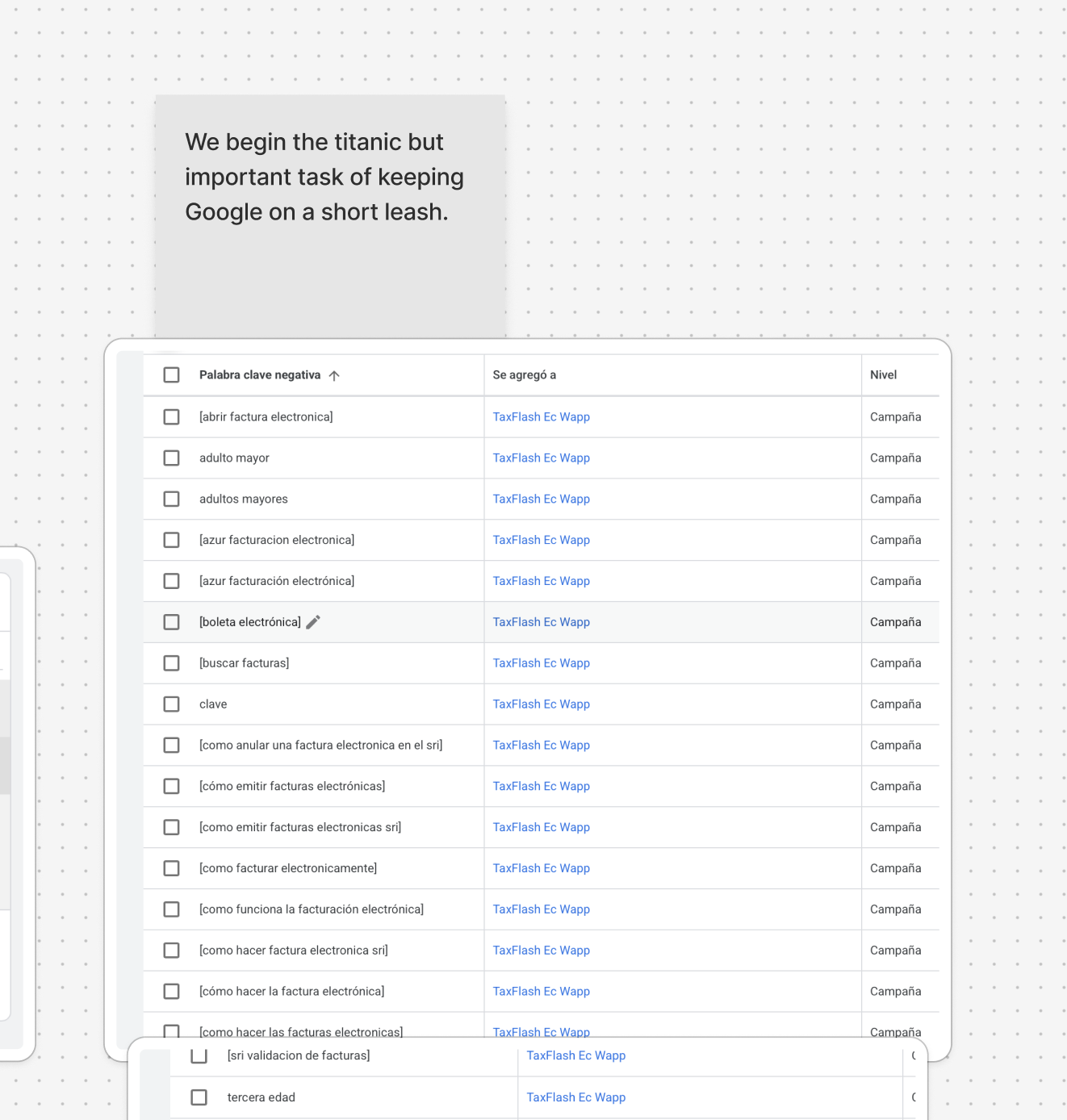
So after two weeks we sit with the search-terms report and start the work that does not end: exact negative keywords. For this campaign that already includes things like adulto mayor, clave, torrent, jobs, vacancies. We mark them in brackets so Google is not allowed to show the ad on that exact junk again. Six months from now there will be hundreds of these, and Google will still invent new ones. The leash is the job.
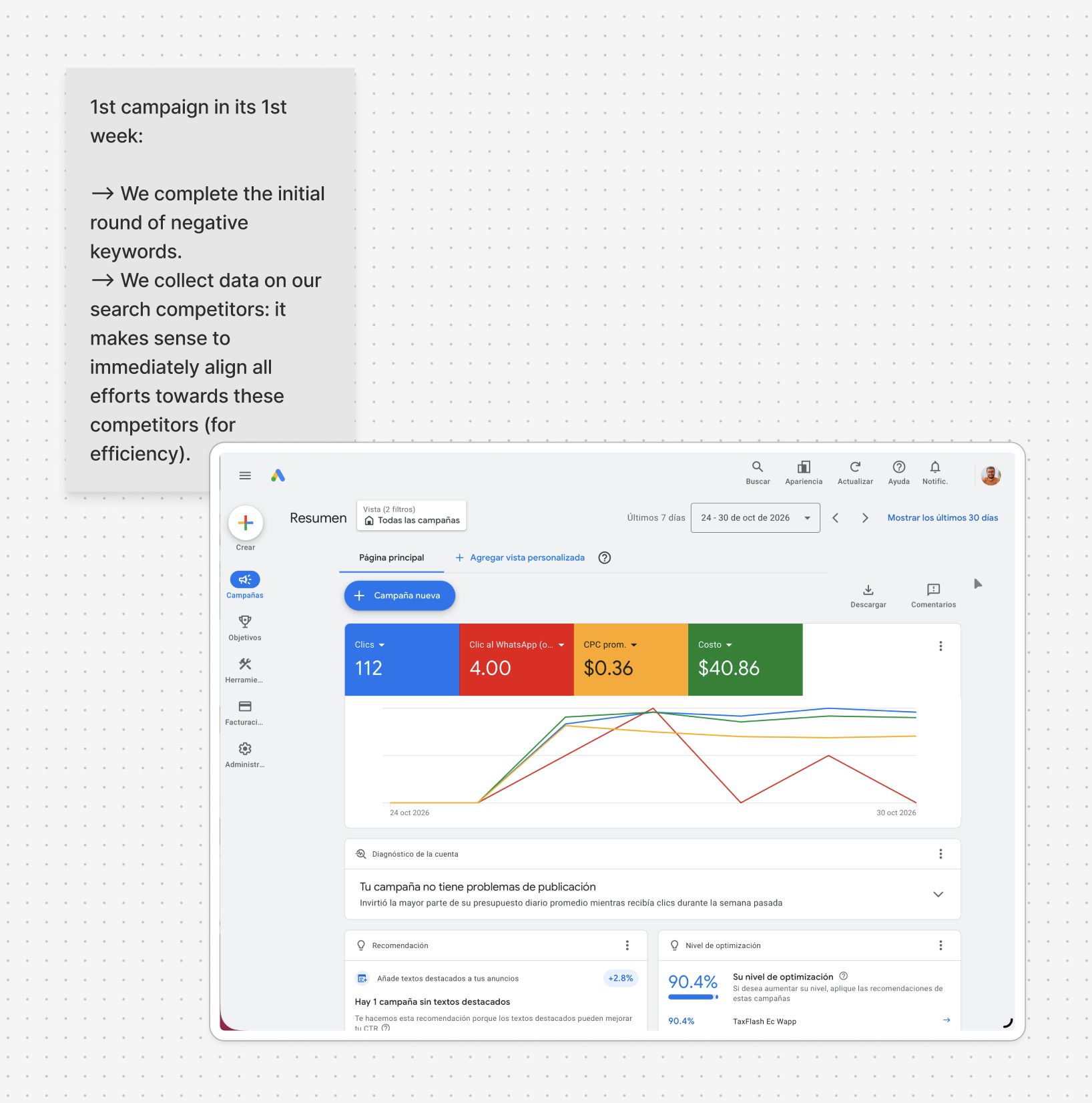
The first week of TaxFlash Ec Wapp, 24 to 30 October 2026, is small on purpose: 112 clicks, four clicks through to WhatsApp, a $0.36 average CPC, $40.86 spent. The useful part of that week is not the number of leads. It is the first pass of negatives, and a look at who else is in the auction — enough to point the next spend at the competitors that actually matter.
People who click land on a page we can change. We run two versions, or we run one week and then a variant, and we keep the version that converts. That is not only a landing-page job. It tells us what should change on the main site for this product, even while the site itself is not an active workstream this month. That data is expensive to get any other way.
The same report tells us which queries deserve a content cluster for SEO and GEO, and who we are bidding against. We watch the competitors. We decide what to copy and what to ignore. Then we take those queries to the hub.
SEO is Google. GEO is the chat: ChatGPT, Gemini, Claude, whatever the buyer opens when they want to know if this company is real. We want to be found, and we want to be cited in a way that does not make the buyer flinch.
Month zero was the technical pass: is the site even readable. After that, both engines still need content. They weigh a mix of markup, writing, and sometimes video, and they compare the weight we have against the competitors. In month one the writing is still the macro: what the product is, what it does. Month two gets more specific, using the search terms the ads already paid to see.
The articles are not generated. Marketing does not know how SRI receipts are loaded. The expert does — usually a CEO, a director, someone who can be named. We get that out of them in a recorded call, then we turn the words into an article that points back to the person and to the video. The model has to be able to see that this was said by someone with authority, not assembled from other pages.
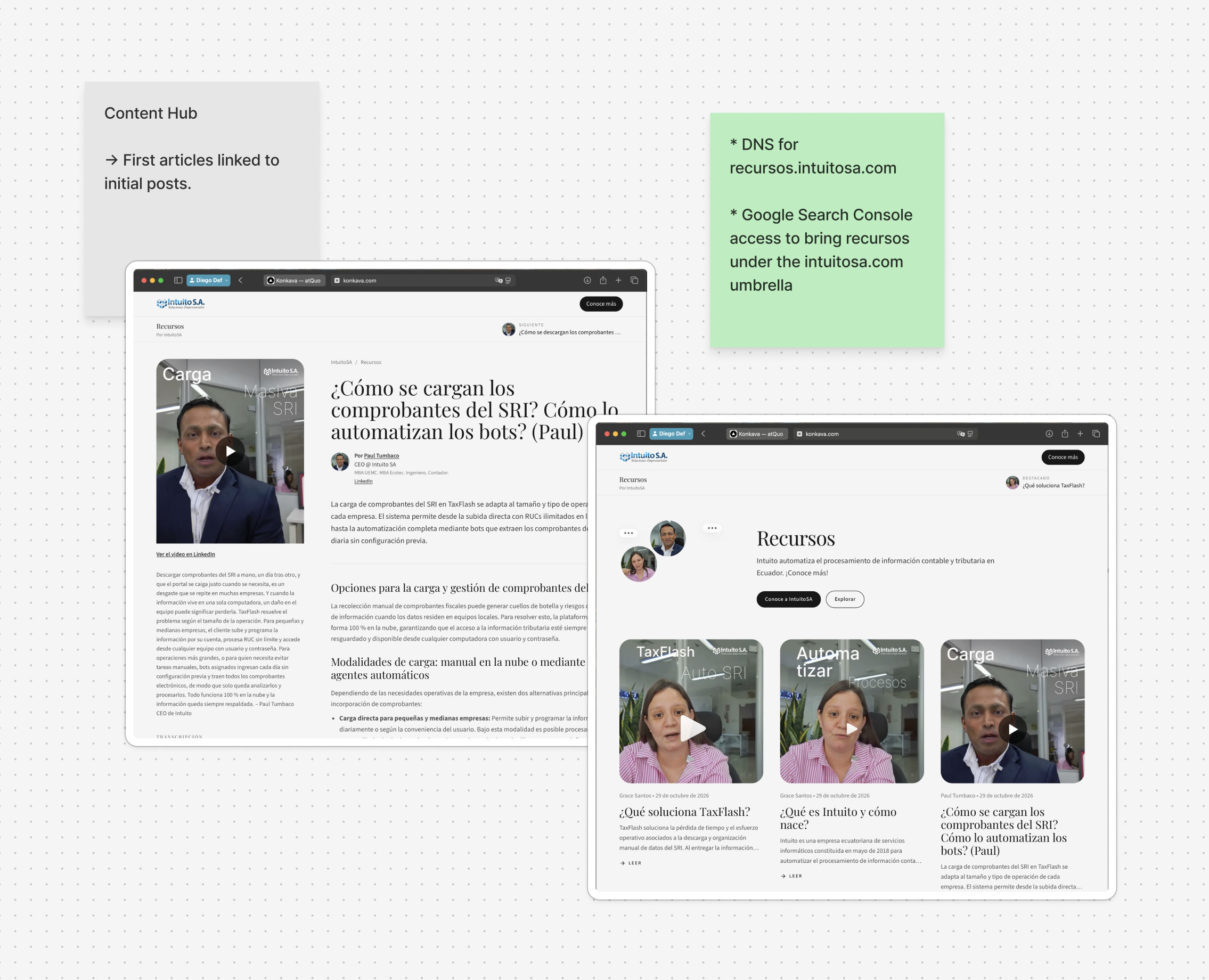
The first hub for Intuito lives at recursos.intuitosa.com. The first pieces are linked from the first social posts. DNS for that subdomain, and Search Console under the intuitosa.com umbrella, are part of the work, not a later IT ticket. The grid that went up in month one answers the obvious questions: what TaxFlash solves, how Intuito started, how SRI receipts are loaded and how bots automate that. Structured data is on the page. The byline is a person.
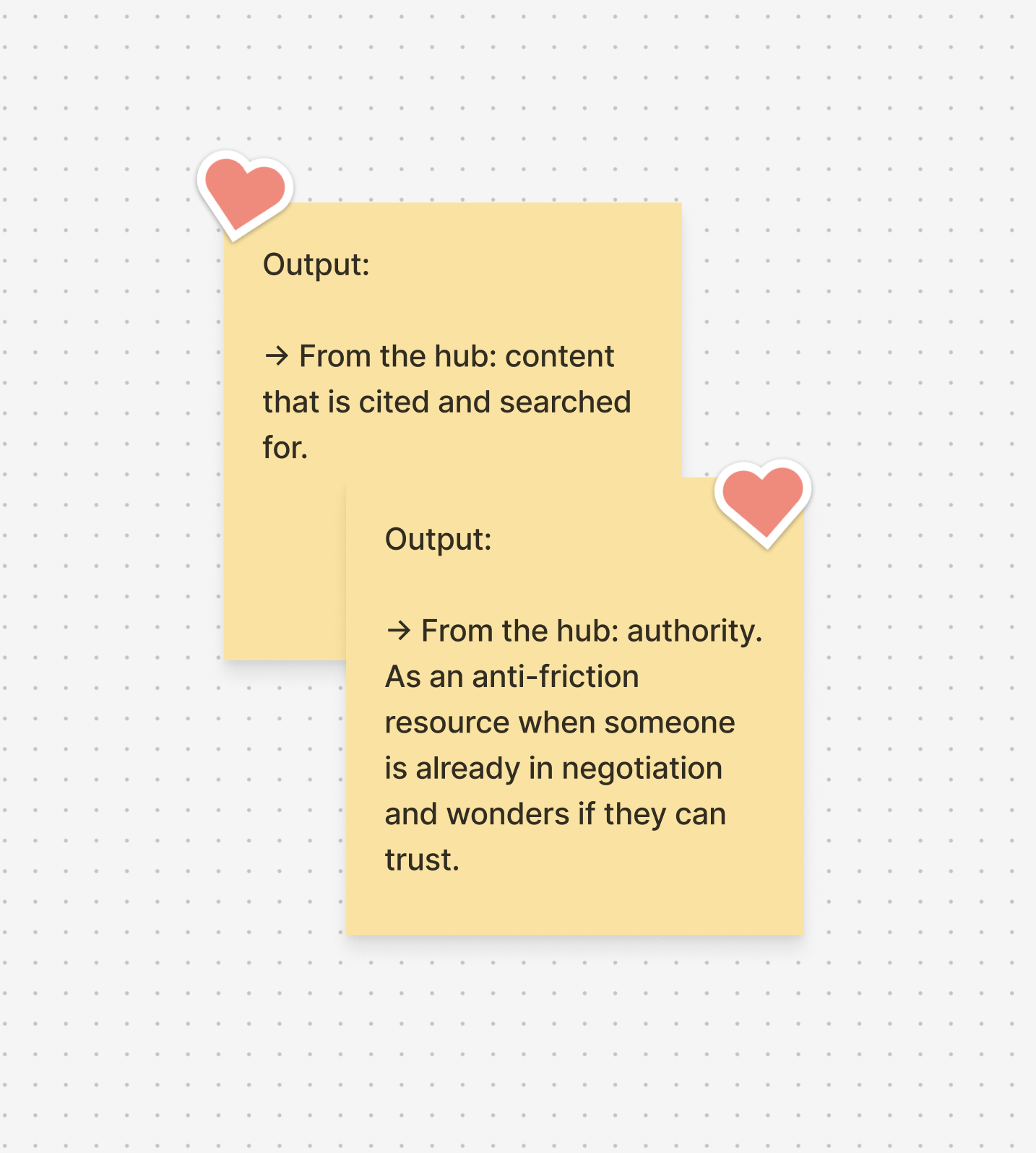
One output is content that can be cited and searched. The other is quieter, and harder to put on a dashboard: authority as an anti-friction resource. Someone is already in a negotiation, or about to write on WhatsApp, and they are choosing between this company and three others. A hub that looks like it was written by people who do the work is the nudge. It does not close the deal. It makes it easier to keep writing.
The article, the LinkedIn cut, the Meta cut, and the expert's profile all come from one recording. Interview, masterclass — the format depends on the week. What we need is the expert speaking to a buyer-persona's pain, in video and in audio, so we can transcribe it and cut it. On YouTube that might stay long. Here we are on Meta and LinkedIn, so the videos are short, and the transcript still feeds the hub.
The two networks are not the same campaign with different crops.
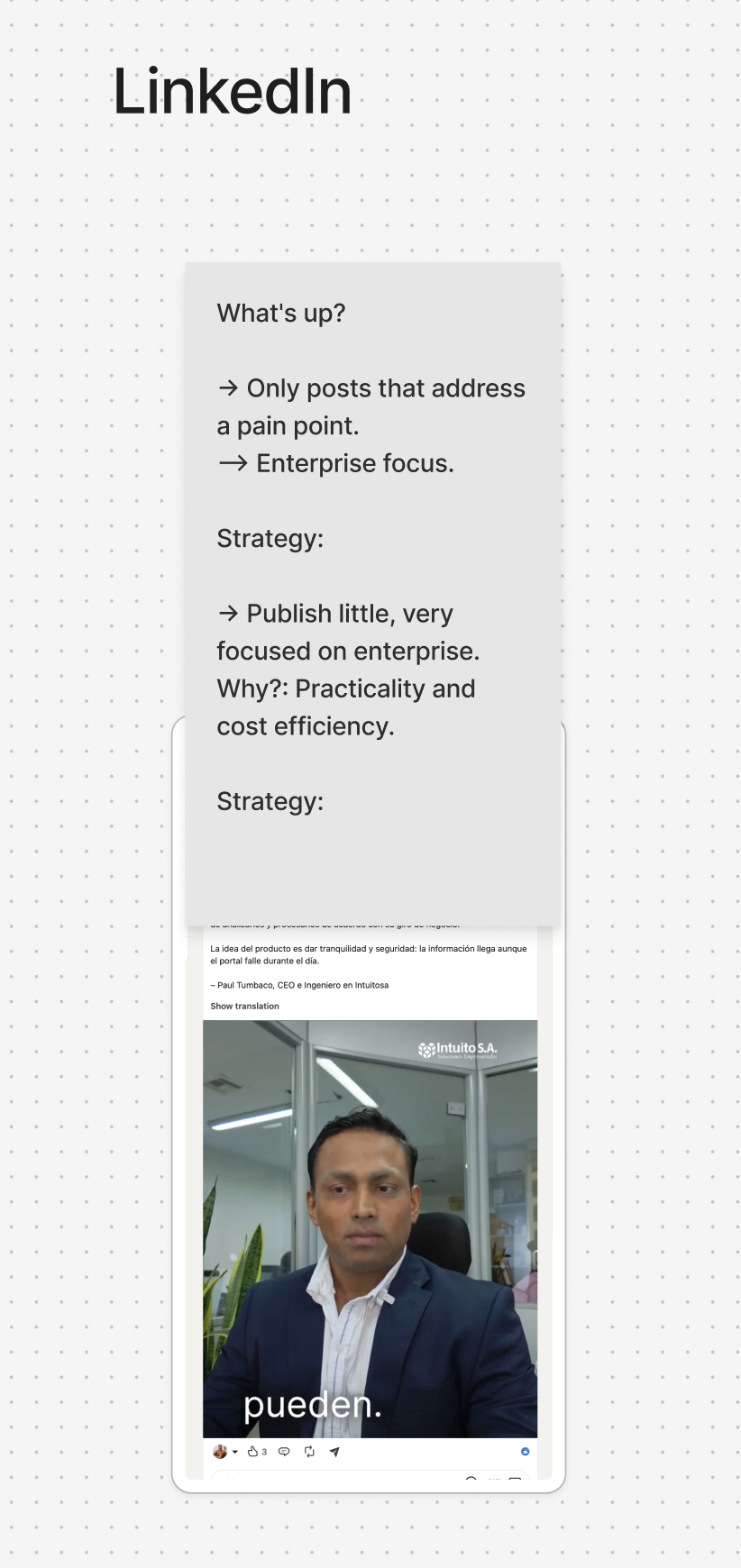
LinkedIn only gets posts that hit a pain, and only with an enterprise focus. We publish little, on purpose. The cost of being everywhere on LinkedIn is not worth it this month. A few posts, on the topics we want, at a quality the expert can stand in front of.
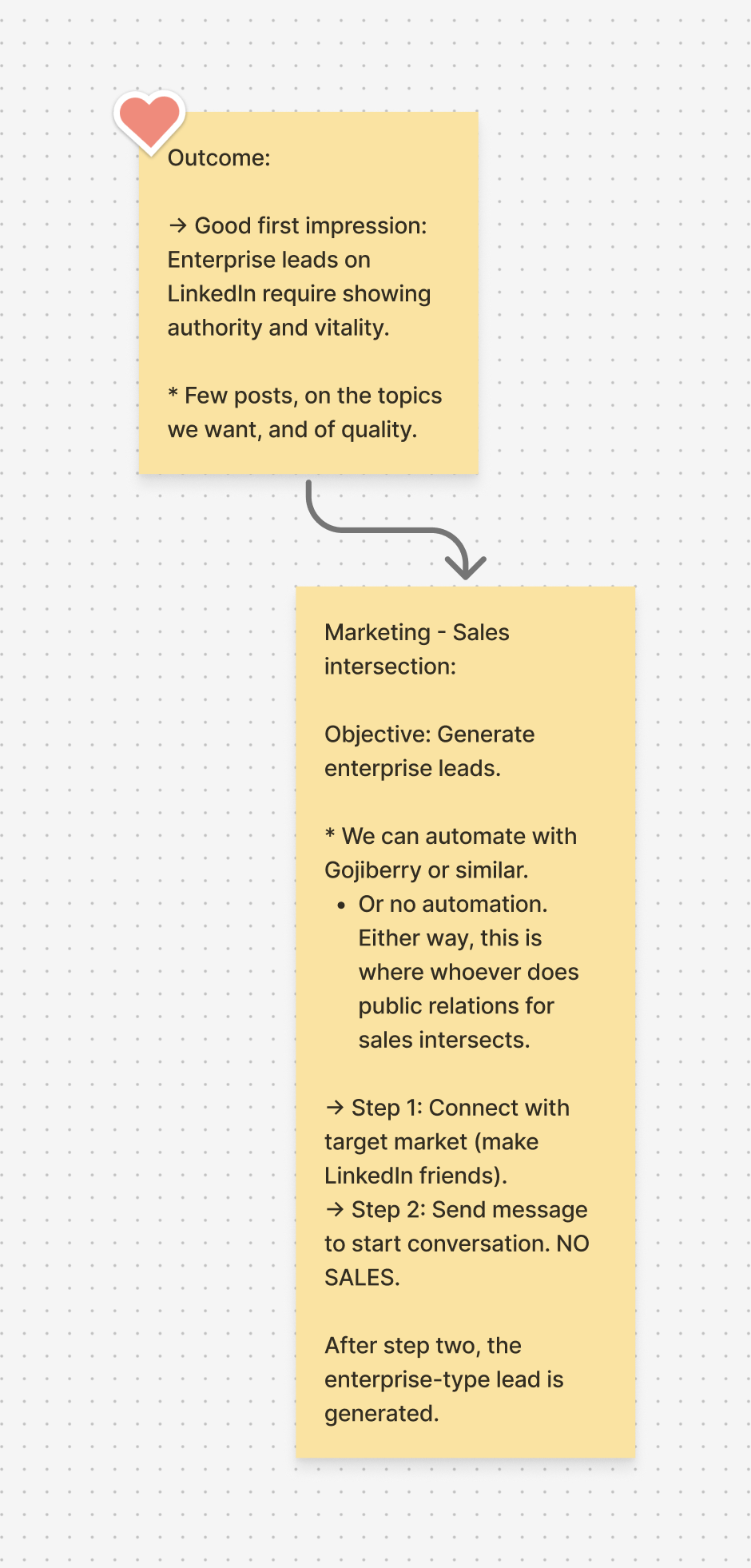
The first job is a first impression. An enterprise lead on LinkedIn has to see authority and some life in the page before anyone writes them. After that, marketing and sales share a seam. The objective is an enterprise conversation, not a pitch in the first message.
That seam can be automated later — Gojiberry, or something like it — or it can stay manual. Either way the steps are the same. First we connect with people who already touched the content, the ones whose titles match the buyer. Then we send a message that starts a conversation. No sales. After they accept, they start seeing the next month of posts. If the content is good enough that they stay, they are no longer strangers. Then we have an excuse to invite them into something useful: a live recording, a free session on the actual problem, a Thursday talk that never mentions the brand. That is how a pain-point video becomes a coffee. The pitch, if it happens, happens after they already know who we are.
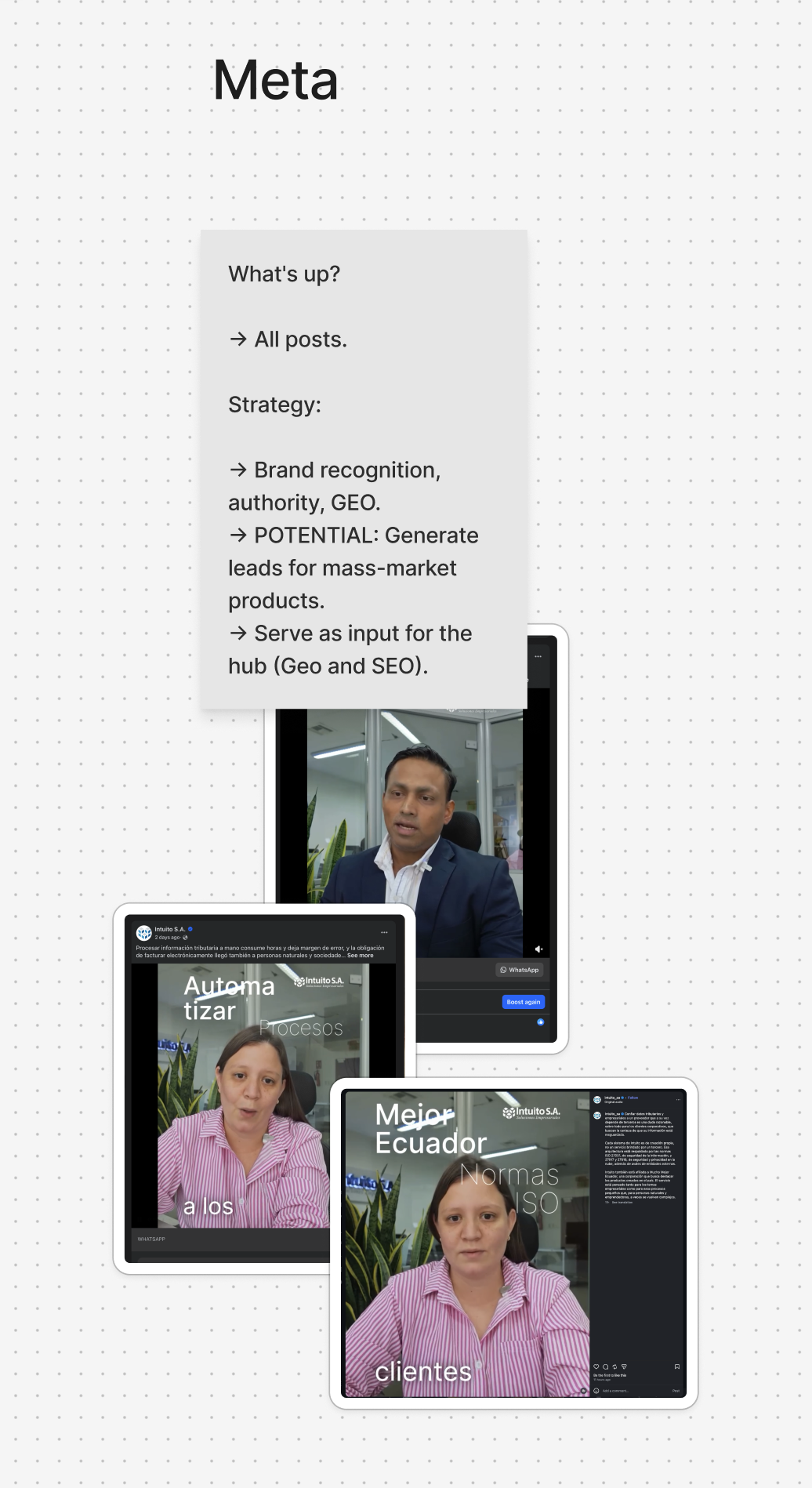
Meta gets all the posts. The job in month one is brand recognition, authority, and GEO — AI cites networks as well as articles — plus a signal back to Google. Lead gen for the more mass-market side of the product is a potential, not the first KPI. We are still paving.
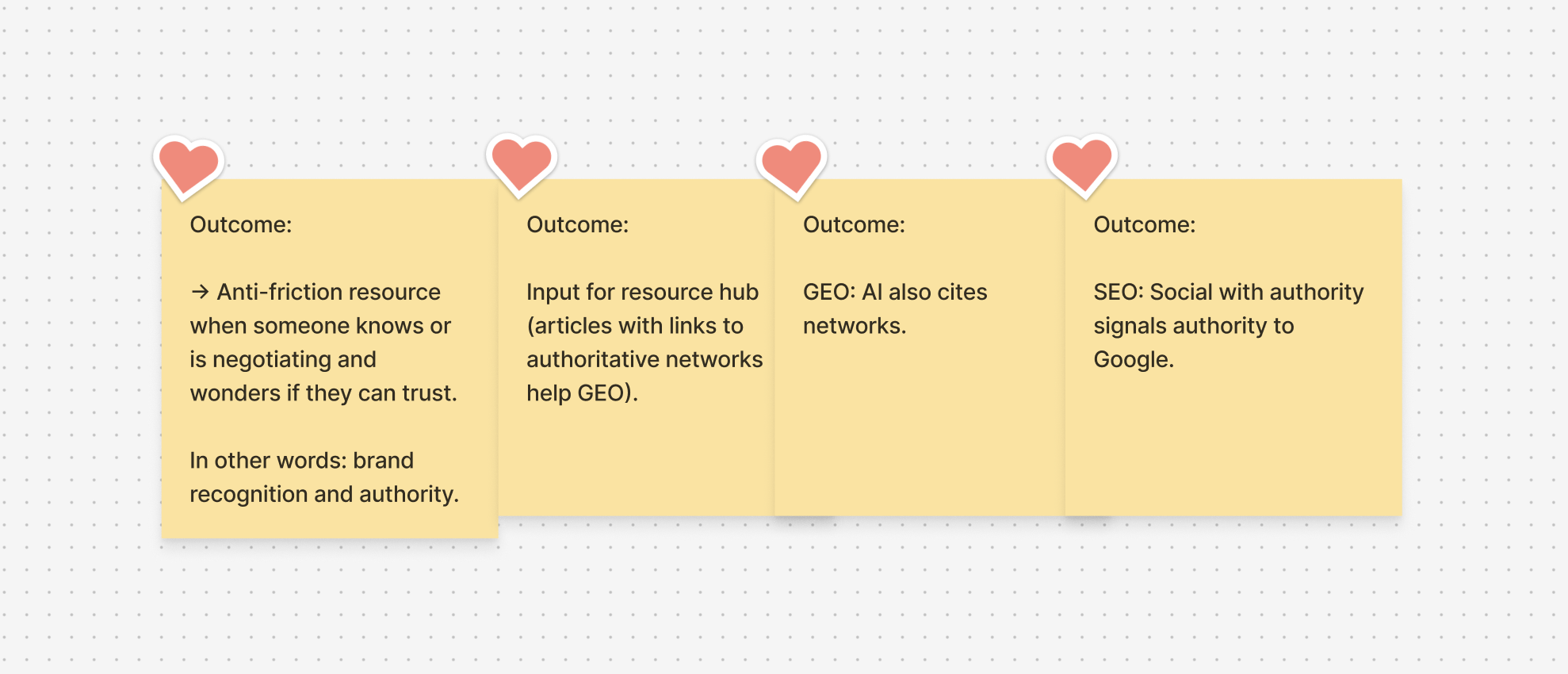
A like on Meta is a like. Targeting is age and geography, in practice. A reaction on LinkedIn is a named person in an industry, at a rank. That is why LinkedIn is the enterprise door, and Meta is the public one.
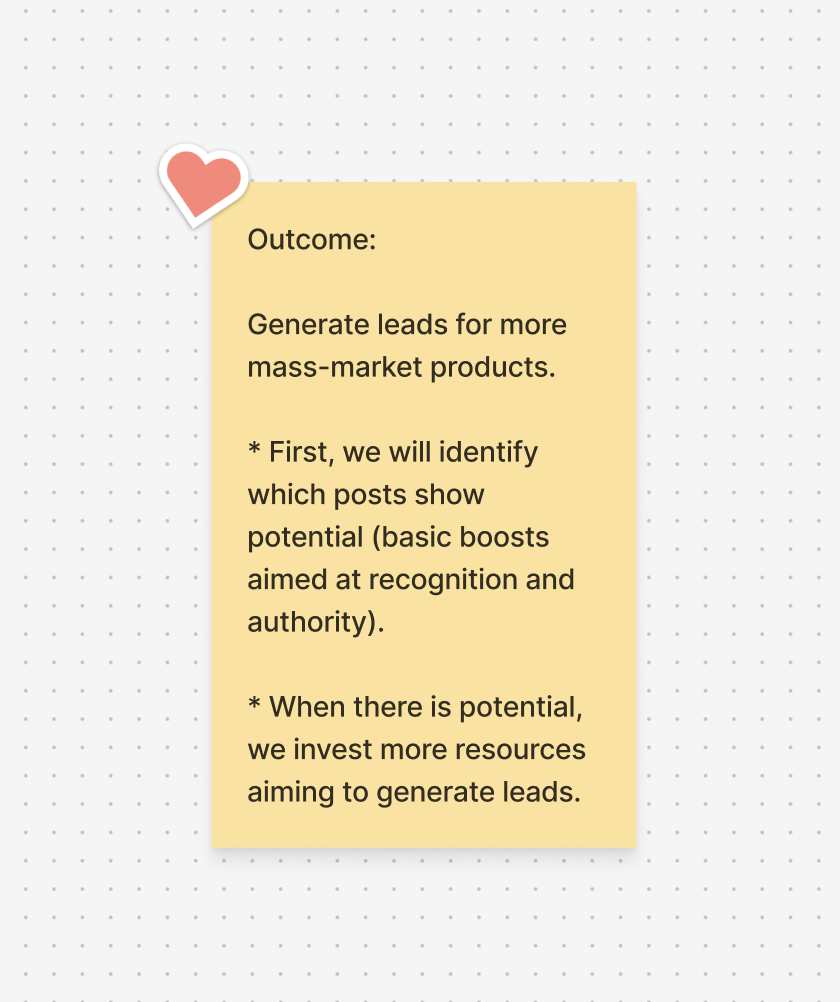
When a Meta post starts to move — shares, comments, the kind of reach that is not polite — we put money behind it. A boost, with a WhatsApp call to action, because that is how this company actually talks to buyers. We do the cheap recognition pass first. We spend for leads only on the posts that already proved they hit.
This is the first month of SEO, GEO, social, and Google Ads, with the website waiting on what those channels learn. The raw material is a video in which someone who does the work answers a buyer-persona's pain. From that recording we get the hub, the cuts, the ads, the negatives, and the first people it makes sense to write to. The connections are the campaign. The channels are just where they show up.

Estrategia, diseño, contenido y crecimiento.